Congress passes short-term FISA 702 extension
Fox News chief congressional correspondent Chad Pergram reports on the 13-day FISA extension. Rep. Ben Cline, R-Va., discusses the measure and Virginia’s controversial redistricting vote on ‘Fox Report.’
NEWYou can now listen to Fox News articles!
Congress punted a long-term fix for a controversial spy law for the second time in a month as lawmakers raced to avoid a lapse in the government’s warrantless surveillance powers set to expire Friday at midnight.
Both chambers approved a 45-day extension of Section 702 of the Foreign Intelligence Surveillance Act (FISA) before leaving Washington on Thursday, allowing lawmakers more time to negotiate reforms to the hotly contested program.
President Donald Trump, who wants a clean extension of the surveillance program, is expected to sign the measure into law.
The Senate first agreed to extend the law to mid-June by voice vote, which was quickly followed by the House of Representatives clearing the extension measure in a bipartisan manner.
HOUSE PASSES FISA RENEWAL IN BIPARTISAN VOTE, PUTTING PRESSURE ON SENATE BEFORE LOOMING DEADLINE
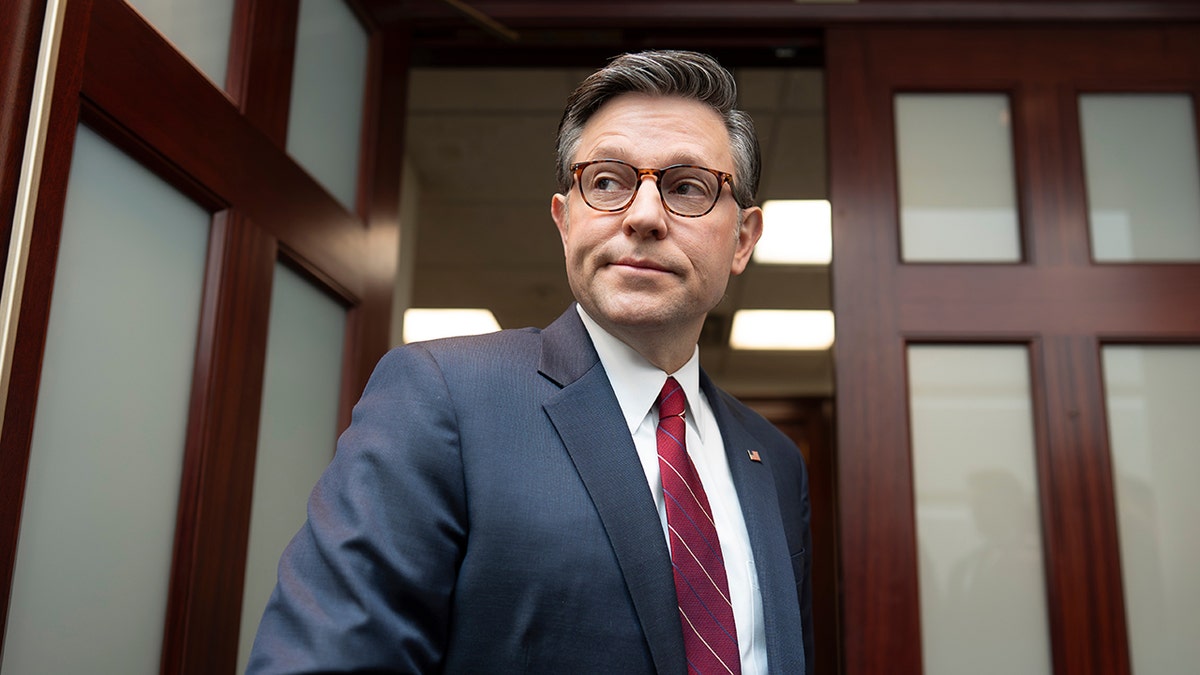
Speaker of the House Mike Johnson, R-La., pauses for questions from reporters as he arrives for an early closed-door Republican Conference meeting at the Capitol in Washington, Tuesday, Feb. 3, 2026. (J. Scott Applewhite/AP Photo)
House Speaker Mike Johnson, R-La., and the majority of GOP lawmakers argued the spy authority was too critical to lapse.
“If we go to bed tonight and we don’t have that program in place, I fear there will be blood on our hands,” Rep. Mike Flood, R-Neb., said earlier on Thursday.
“We can’t have FISA go dark,” House Majority Leader Steve Scalise, R-La., told reporters prior to the vote.
The bicameral agreement for a short-term fix came after the Senate swiftly rejected a House bill extending the Section 702 program for three years. The lower chamber’s measure included modest reforms to the program and a permanent ban on central bank digital currencies (CBDC) — a priority of conservatives associated with the House Freedom Caucus.
But the inclusion of that provision was a nonstarter in the Senate, given that it was unrelated to the underlying bill and was already baked into a housing affordability package passed by the Senate in March that the House has yet to move on.
“We’ll kick it over there and process it quickly, and we’ll kick the can down the road again,” Senate Majority Leader John Thune, R-S.D., told Fox News Digital.
More than two dozen GOP privacy hawks voted against the Senate-passed measure. The group sharply criticized the Senate for quashing the House proposal and argued the upper chamber was trying to jam them with a clean extension including none of their reforms.
“The House needs to stand strong and send it back and say we won’t accept that,” Rep. Keith Self, R-Texas, a GOP privacy hawk, told Fox News. “You need to have a warrant or CBDC on it.”
“Everything that we did yesterday, the Senate has said we won’t take,” the Texas Republican added. “That’s what the Senate thinks of the House.”
House Democrats were split over the 45-day extension with 94 lawmakers voting in the affirmative and 85 opposing the measure.
The process in the upper chamber was nearly derailed when Sen. Ron Wyden, D-Ore., announced that he planned to block the Senate’s alternative plan in favor of a shorter, three-week extension.
HOUSE PUNTS TRUMP SPY POWERS EXTENSION AFTER CONSERVATIVES BLOCK DEAL, FORCING END-OF-MONTH SHOWDOWN
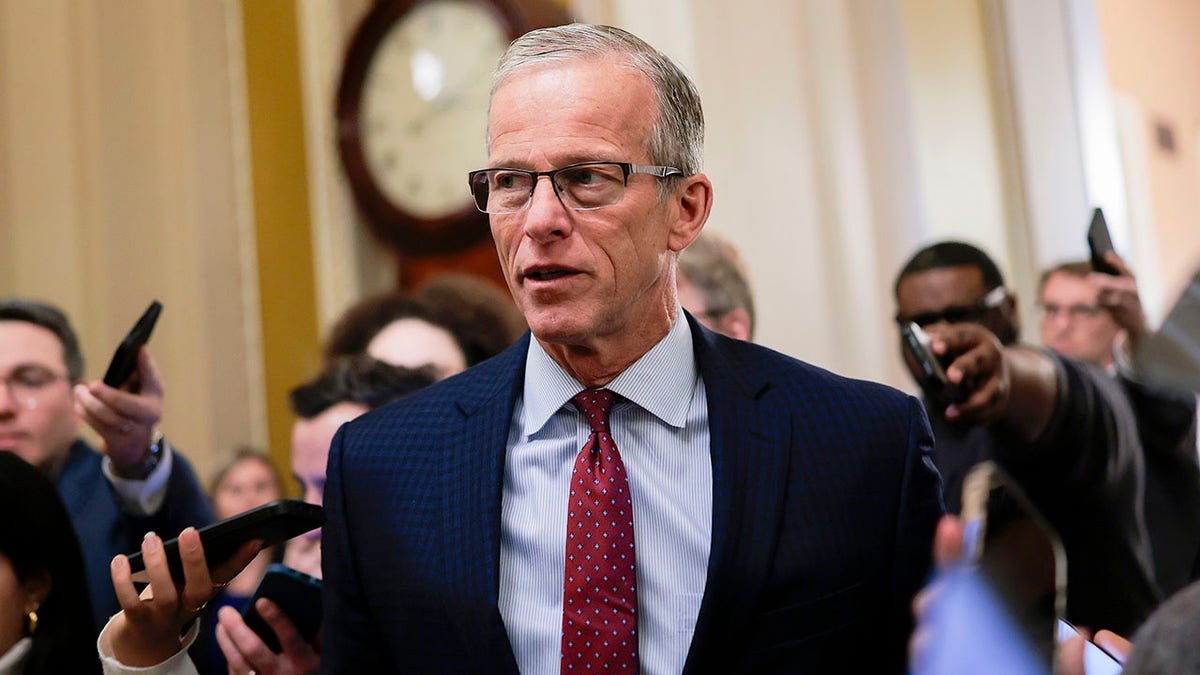
Senate Majority Leader John Thune, R-S.D., talks to reporters before entering the Senate chamber in Washington, D.C., on Jan. 5, 2026. (Heather Diehl/Getty Images)
The spy law fight is one of the few horseshoe issues in Congress that blends Democrats and conservatives in a push for stronger privacy protections. That’s because of the Section 702 spying powers, which allow the government to spy on foreign nationals abroad.
However, nothing in the law prevents it from collecting data on Americans if they happen to be involved in those communications. To stop that, Wyden and others are demanding warrant requirements to add a layer of protection for Americans’ whose conversations are ensnared under Section 702.
The House’s version lacked that reform, but Wyden agreed to an extension after working with Sens. Tom Cotton, R-Ark., and Mark Warner, D-Va., the top lawmakers on the Senate Intelligence panel, to send a letter to Director of National Intelligence Tulsi Gabbard and the acting Attorney General to declassify a FISA court ruling to show how the program is being used against Americans.
Meanwhile, conversations on reforms are still ongoing.
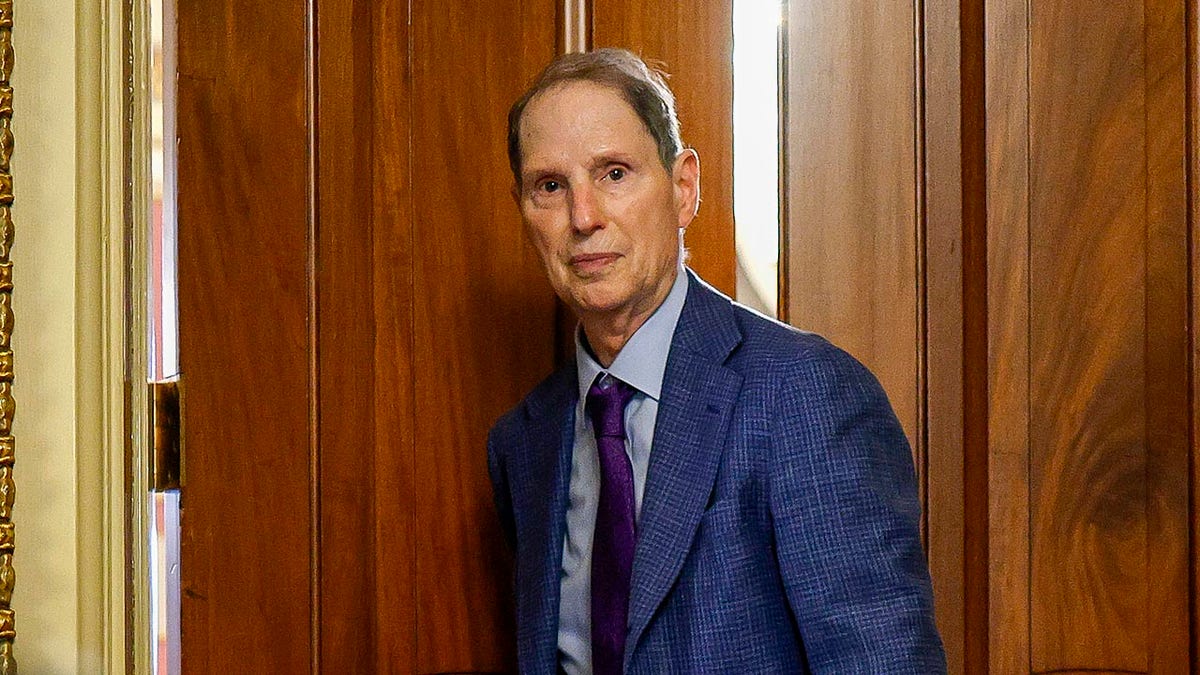
Sen. Ron Wyden, D-Ore., leaves a Senate Democratic meeting at the U.S. Capitol Building on Oct. 3, 2025, in Washington, D.C. (Kevin Dietsch/Getty Images)
CLICK HERE TO DOWNLOAD THE FOX NEWS APP
Thune said that there was “already a pretty substantial dialogue” between Cotton, Warner, their House counterparts and the White House to address reforms while ensuring that the “program works.”
“So we’re entertaining those ideas at the moment, and we’ll see where that conversation goes,” Thune said. “We got 45 days. I don’t like kicking the can down the road, not my jam.”
The Trump administration has lobbied Congress for weeks to pass a long-term FISA renewal bill with little to no modifications, but has repeatedly failed to make headway.
“This department strongly supports the reauthorization of FISA 702,” Department of War Secretary Pete Hegseth told lawmakers Wednesday. “It is not hyperbole to say many of the most important missions we have executed could not have happened without the intelligence gathered through FISA 702.”