NEWYou can now listen to Fox News articles!
A Biden-appointed judge dealt the Trump administration another legal blow Thursday, tossing its lawsuit seeking to upend New York City’s sanctuary policies after ruling that the Justice Department’s arguments amounted to a “backdoor around the Tenth Amendment.”
The Trump administration sued New York City in July 2025, alleging that its sanctuary laws unlawfully hinder federal immigration enforcement by restricting local law enforcement’s cooperation with federal authorities.
The New York City case is one of more than two dozen lawsuits the Trump administration has filed against state and local jurisdictions over sanctuary and related policies restricting cooperation with federal immigration authorities.
But U.S. District Judge Ramón E. Reyes Jr. ruled the federal government lacked standing to challenge New York City’s restrictions on honoring ICE detainers and rejected the Justice Department’s claims that the city’s sanctuary policies are preempted by federal law.
MAMDANI BLASTS FEDS FOR WAGING ‘CAMPAIGN OF VIOLENCE AND TERROR’ AGAINST NYC’S IMMIGRANTS
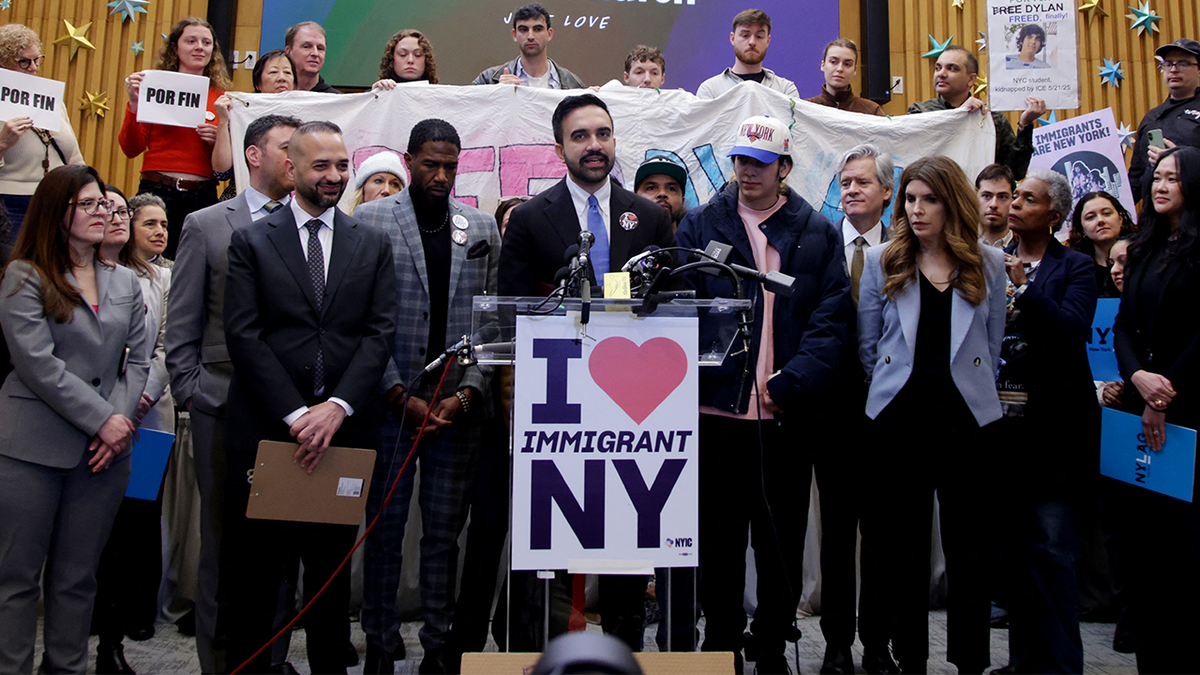
New York Mayor Zohran Mamdani speaks during a news conference at Middle Collegiate Church in New York City March 19, 2026. (Leonardo Munoz/AFP via Getty Images)
New York City Mayor Zohran Mamdani celebrated the ruling in a post Friday on X, accusing the administration of attempting to turn city employees into immigration enforcement agents.
“The federal government tried to turn our public servants into deportation agents and force New York City to carry out ICE’s cruel agenda,” Mamdani wrote.
“Today, a federal court rejected that effort and upheld our laws. Every New Yorker deserves to seek help from their city without fear of being targeted for deportation. We will stand by our immigrant neighbors, defend our laws and protect the promise that this city belongs to all of us.”
Reyes found the administration lacked standing because striking down the city’s restrictions would not remedy its alleged harm because separate state laws restricting cooperation would remain in place.
But Abhishek Kambli, a former federal prosecutor and partner at Holtzman Vogel, disputed that reasoning, arguing that the city’s laws independently harm the federal government’s authority regardless of whether similar state restrictions exist.
“The sovereign harm is done just by the fact that New York City has the law (on) the books, no matter what other factors prevent practical application of the United States’s position,” Kambli told Fox News Digital.
FEDERAL JUDGE BLOCKS NEW YORK LAW BANNING ICE AGENTS FROM WEARING MASKS
Reyes also rejected the Justice Department’s argument that New York City’s sanctuary policies are overridden by federal immigration law.
“Even if the United States has standing — and it does not — its preemption claims fail,” Reyes wrote. “All of the United States’ preemption claims — express, conflict and field — fail because the relevant federal statutes do not regulate private actors.”

An immigrant is detained by U.S. Immigration and Customs Enforcement agents inside the Federal Plaza courthouse in New York City after legal proceedings. (Lokman Vural Elibol/Anadolu via Getty Images)
The judge pointed to the 10th Amendment’s anti-commandeering doctrine, which prevents the federal government from forcing state and local governments from using their own officials and resources to administer federal programs.
“If states cannot remain free to control their agencies and employees to resist federal immigration enforcement, which is within states’ constitutional prerogatives, the Tenth Amendment anticommandeering doctrine means nothing,” Reyes wrote.
Kambli, however, argued that Reyes misinterpreted the distinction between forcing local governments to assist federal immigration enforcement and preventing them from actively obstructing it.
“Really what the 10th Amendment anti-commandeering means is you can’t force states to go from doing nothing to affirmatively assisting. What these statutes are doing is basically preventing states from actively obstructing federal immigration enforcement,” Kambli said.
He argued that the Justice Department was not seeking to force New York City officials to carry out federal immigration enforcement, but instead to prevent local laws from interfering with federal authorities’ ability to enforce immigration law.
“That’s different from the federal government saying a state or a city is required to actively assist ICE in operations,” Kambli said.
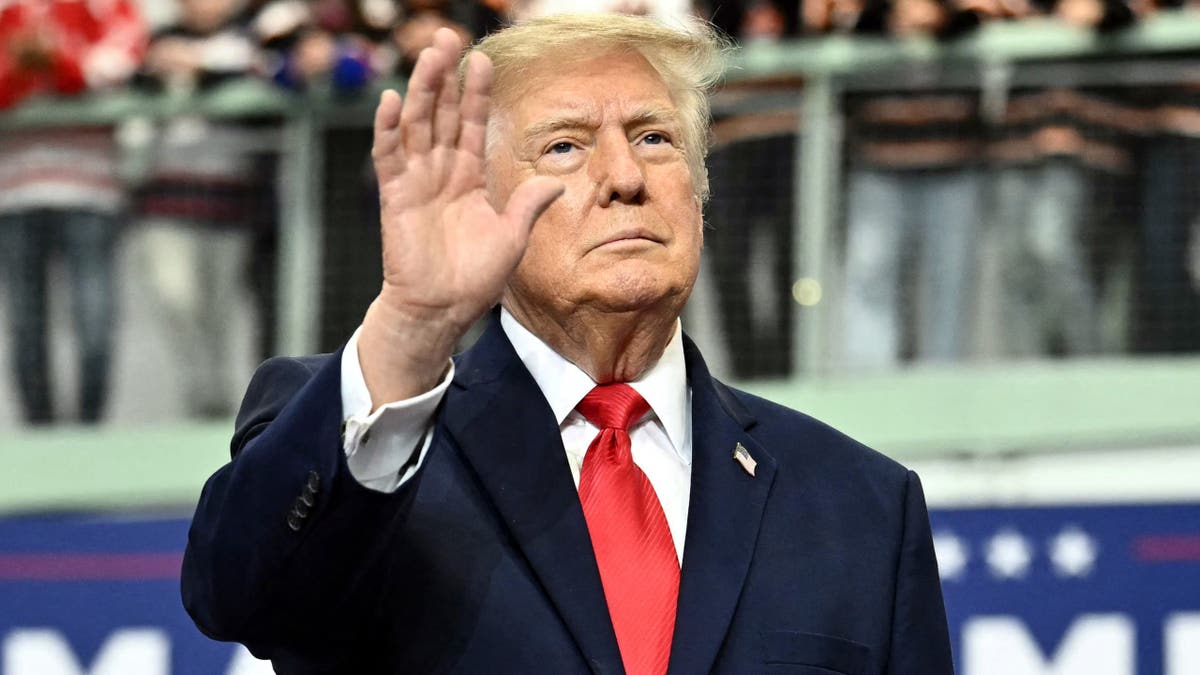
President Donald Trump arrives to speak during a campaign rally at Curtis D. Menard Memorial Sports Center in Wasilla, Alaska, Oct. 13, 2026. (Kent Nishimura/ FP via Getty Images)
The Justice Department also argued that New York City’s sanctuary policies went beyond simply refusing to assist federal authorities by restricting information sharing with ICE that is protected under federal law. The administration additionally claimed that the city unfairly singled out federal immigration officials for restrictions that did not apply to other law enforcement agencies.
Reyes, however, found that federal information-sharing protections apply specifically to information about an individual’s citizenship or immigration status and do not require local governments to provide ICE with broader details, such as a person’s release date or whereabouts.
“The United States’ assertion that information regarding release dates and custody status is information regarding immigration or citizenship status is contrary to law,” Reyes wrote.
Kambli, however, argued that the distinction over what information is being withheld misses the greater issue at hand.
SIGN UP TO GET THE POLITICS NEWSLETTER
“The issue is mainly whether any state or locality that prohibits cooperation is preempted by federal law, regardless of what the information is,” Kambli said.
CLICK HERE TO DOWNLOAD THE FOX NEWS APP
The ruling marks the latest setback for the Trump administration’s efforts to challenge sanctuary policies in federal court after dismissals of similar lawsuits involving Boston, Los Angeles and Minnesota.