NEWYou can now listen to Fox News articles!
A Clinton-appointed judge in Ohio is blocking the implementation of an Ohio law that requires voting registrants to provide photo ID proof of their citizenship before enrollment.
In a decision delivered on Tuesday, Judge Solomon Oliver Jr. stayed the law, citing what he saw as a conflict with federal requirements.
“The court grants plaintiff’s motion for preliminary injunction … from relying on House Bill 54’s amendment to require any driver’s license or renewal to produce documentary proof of citizenship before offering the opportunity to register to vote,” Oliver wrote.
The decision is just the latest development in the national debate over state-level voting requirements designed to prevent non-citizens from participating in U.S. elections — and how far those requirements can go without overarching federal reforms.
FEDERAL APPEALS COURT RESTORES TEXAS MAIL BALLOT ID REQUIREMENTS IN MAJOR ELECTION INTEGRITY RULING
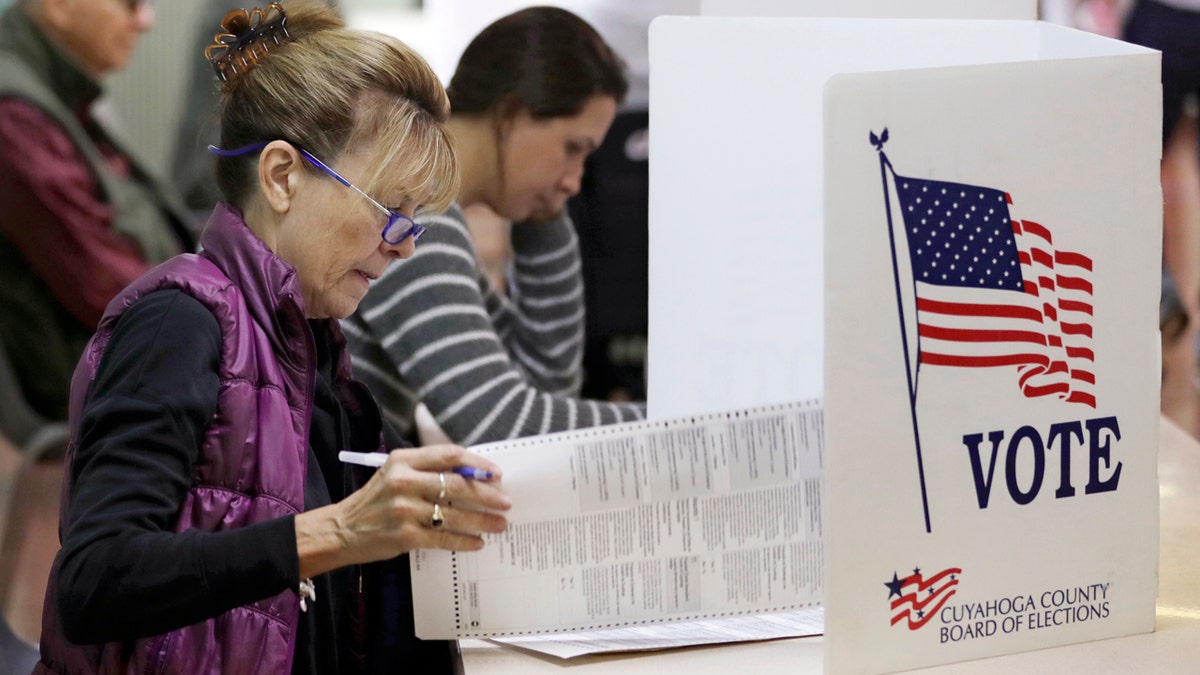
Patricia Wagoner looks over the ballot while voting, Tuesday, Nov. 6, 2018, in Gates Mills, Ohio. Across the country, voters headed to the polls Tuesday in one of the most high-profile midterm elections in years. (AP Photo/Tony Dejak)
Most immediately, the decision means that voter registrants in Ohio can once again enroll without a passport, a current driver’s license, a certification of naturalization, or a birth certificate.
Ohio Secretary of State Frank LaRose announced on Tuesday that his office plans to appeal the decision.
“We strongly disagree with that decision, and I’ve asked our legal team to file an immediate appeal. I will vigorously defend our legal authority to safeguard our voter rolls and protect the integrity of Ohio’s elections,” LaRose said in a statement.
In the case of Red Wine & Blue v. the Ohio Secretary of State, the court was asked to weigh whether requirements under the new Ohio law conflict with the National Voter Registration Act (NVRA), also known as the “Motor Voter Act.”
That law, passed in 1993 under the Clinton administration, instructs states to give voters the opportunity to register to vote using the same information they use when applying for a driver’s license. The bill was originally intended to increase voter participation.
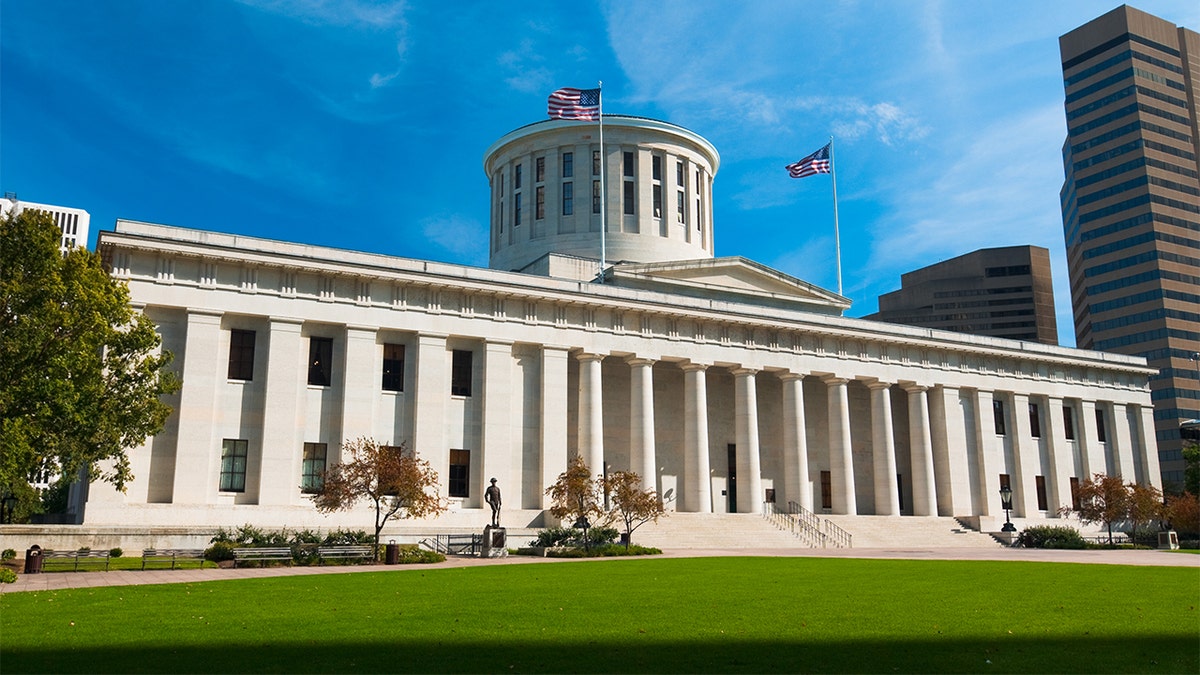
“Ohio Statehouse, the State Capitol building of Ohio (housing the State General Assembly and top state government offices) built in the Greek Renaissance architectural style.” (iStock)
It states that “the voter registration application portion … for a driver’s license may not require any information that duplicates information required in the driver’s license portion of the form.”
Notably, the NVRA doesn’t explicitly prohibit states from requiring proof of citizenship. But because virtually all driver’s license forms ask about citizenship status, Oliver believes further proof amounts to redundancy.
He laid out his view in Tuesday’s decision.
“As the rest of Ohio’s voter registration scheme demonstrates, election officials do not need documentary proof of citizenship to assess a voter registration applicant’s citizenship because signed attestation of citizenship is enough,” Oliver wrote.
LaRose, the secretary of state, disagreed. He cited instances of known voter fraud that have escaped detection because of the current enforcement mechanisms.
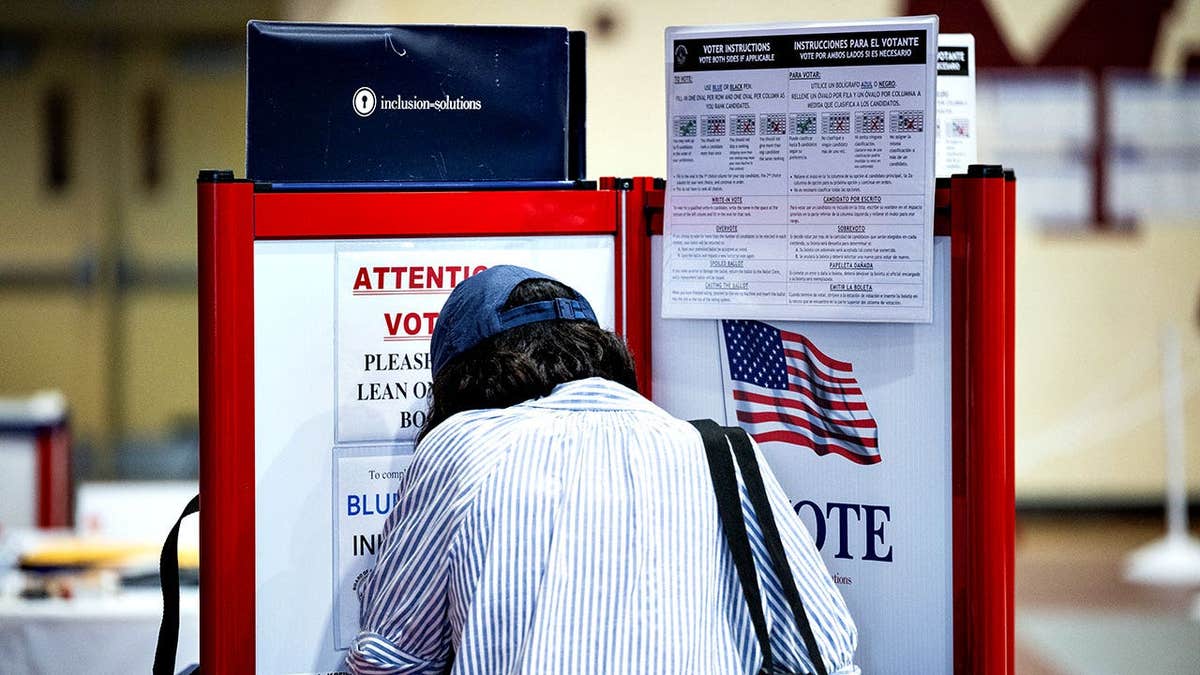
A voter casts their ballot at a polling location. (Graeme Sloan/Bloomberg via Getty Images)
CLICK HERE TO DOWNLOAD THE FOX NEWS APP
“Earlier this year, an Ohio woman admitted to voting illegally as a lawful permanent resident in 2018 because, according to the judge in the case, ‘a [Bureau of Motor Vehicles] clerk, a government official, told her to register.’ The court found her not guilty by reason of entrapment. The judge specifically noted that the voter admitted she knew she was not a citizen when she voted, but he found that the BMV employee misled her into violating the law by implying she was eligible to vote.”
“The Franklin County case proves it’s not enough to just have a person’s attestation,” LaRose added. “Ohio has a constitutional requirement to ensure that only U.S. citizens are voting in our elections.”