Americans flee blue states for lower taxes
Rastegar Capital CEO Ari Rastegar joins ‘Fox News Live’ to discuss Americans leaving blue states for lower taxes and the impact of rising rates on the housing market and supply-side issues, including helium and fertilizer.
NEWYou can now listen to Fox News articles!
FIRST ON FOX: A Senate Republican wants to slash six figures from the cost of a new home by rooting out cumbersome regulations at the state and local level, which he said will make homeownership more affordable for Americans.
Sen. Bill Hagerty, R-Tenn., wants to gut the so-called “bureaucrat tax,” which piles on regulations that amount to nearly $100,000 in added costs when building single-family homes, in order to expand the housing supply in the country and lower the barrier to entry for buying a home.
He’s introducing the Freedom to Build Act, which would create a designation of the same name that would open up a flow of federal grants to builders and communities that would offset construction costs and incentivize deregulation along the way.
TRUMP-BACKED AFFORDABLE HOUSING OVERHAUL CLEARS SENATE, WHILE HOUSE GOP RAISES RED FLAGS
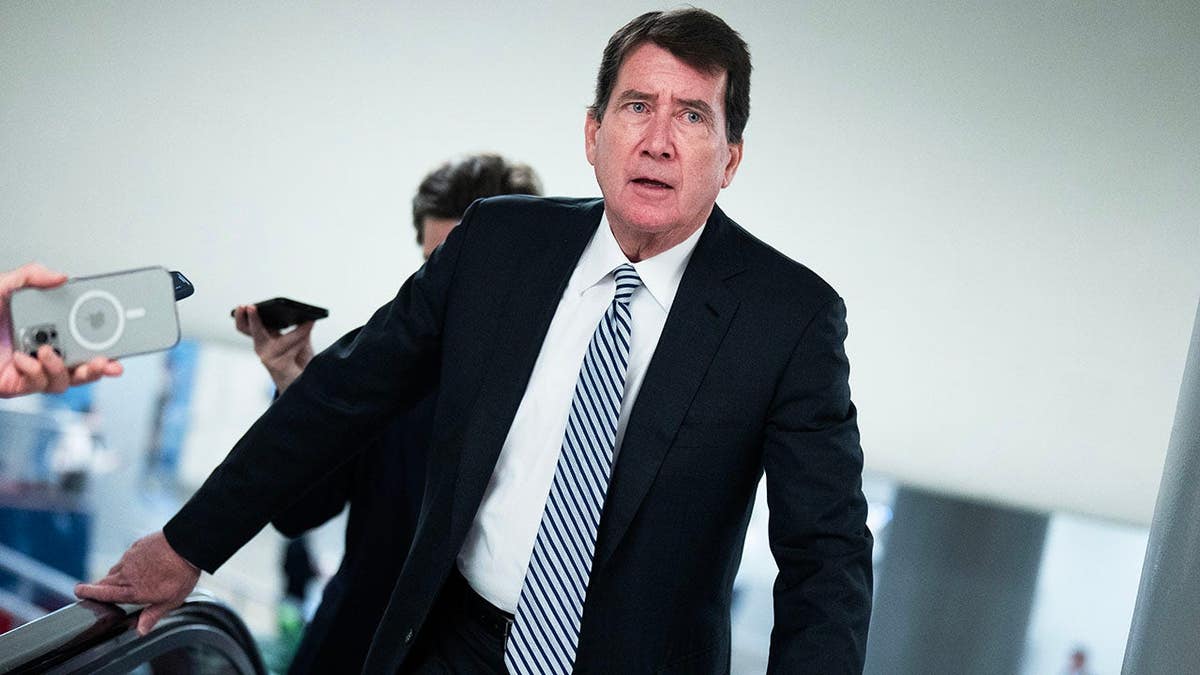
Sen. Bill Hagerty, R-Tenn., is seen inside the U.S. Capitol on Feb. 4, 2026. (Tom Williams/CQ-Roll Call, Inc.)
But it’s not a federal mandate to spur deregulation. Instead, communities could opt into the Freedom to Build designation, which would, in turn, put those locales at the front of the line for federal grants from the Department of Housing and Urban Development.
“For many Americans, the dream of owning a home is increasingly out of reach, and excessive regulations have made new homes too costly for many American families,” Hagerty said in a statement to Fox News Digital. “My Freedom to Build Act streamlines costly and often redundant regulations to reduce the cost of a new home in our country.”
Hagerty’s legislation follows the newly released Economic Report of the President, which lamented the so-called bureaucrat tax and its effect on the construction of single-family homes. It described the bureaucrat tax as a barrier to building and homeownership because of the addition of “California-style fees, mandates, regulations, and red tape in many states and localities.”
BIPARTISAN HOUSING PUSH ADVANCES, BUT TRUMP-BACKED INVESTOR BAN FACES RESISTANCE

President Donald Trump irked Americans on both sides of the aisle on Sunday night by posting an AI-generated image depicting himself as Jesus Christ. (Tasos Katopodis/Getty Images)
The report contended that home prices rose sharply during a period of low interest rates between 2012 and 2021 because of “strong demand running up against a wall of tight supply due to bureaucratic costs and delays that function like a six-figure ‘bureaucrat tax’ on the cost of building a new home.”
The report also found that the bureaucrat tax constituted between 24% and 29% of the cost of a new home, and that the cumbersome regulations not only add to the cost of building a new home but also slow down the construction of a single-family home.
HOUSE PASSES BIPARTISAN HOUSING BILL AS TRUMP ZEROES IN ON AFFORDABILITY CRISIS
“Put even more concretely, the bureaucrat tax adds over $100,000 to the cost of a new single-family home,” according to the Economic Report of the President.
“Reform at the state and local levels to tackle the sources of the six-figure bureaucrat tax would greatly enhance the ability of supply to keep up with stronger demand,” the report continued.
Meanwhile, the Senate passed a massive affordable housing package backed by President Donald Trump last month.
CLICK HERE TO DOWNLOAD THE FOX NEWS APP
The 21st Century ROAD to Housing Act, which easily sailed through the upper chamber on a bipartisan vote, is geared toward helping first-time homebuyers and lower-income Americans enter the housing market or gain access to more affordable housing options.
It also includes Trump’s push for a ban on institutional investors buying up homes. Still, the bill has not moved in the lower chamber, where lawmakers are frustrated with some of the tweaks made in the Senate, including the institutional investor ban.