Tight Senate races shift focus to AI data centers, energy prices
Ohio Senate race candidates clash over local energy costs and AI data centers as the ‘Fox News Sunday’ panel analyzes the upcoming midterm elections. The panel debates the political stakes of high utility bills and Chinese bot farm manipulation on social media. New polling shows a tight Senate race in Maine.
NEWYou can now listen to Fox News articles!
It’s a calculation by Republicans to keep the Senate in session this week.
Yes. The Senate was scheduled to meet anyway over the next few days. But the general consensus early last week was that the Senate would be done then and those facing competitive races would be back home campaigning.
Then Wednesday hit.
Republicans wanted to stay in Washington. For a very specific reason. And many of them told Senate Majority Leader John Thune, R-S.D., as much at their weekly luncheon.
“Odds are we plan on being here next week,” said Thune.
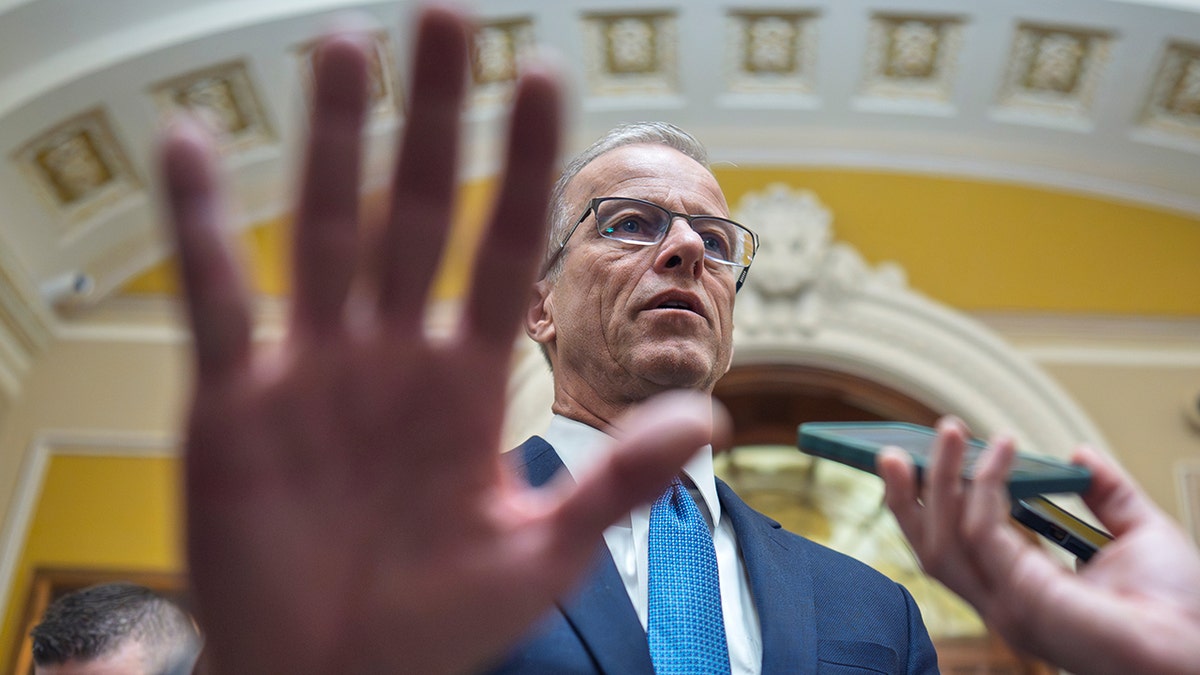
Senate Majority Leader John Thune, R-S.D., speaks to reporters outside the chamber at the Capitol in Washington, Thursday, April 2, 2026. (J. Scott Applewhite/AP Photo)
One Senate aide compared the Senate’s schedule to a cat chasing a beam of light from a laser pointer.
But the Senate is in fact meeting. There are reasons. Most of them are political.
The Senate wasn’t quite done with the bill to regulate money in intercollegiate athletics last week. And with the affordability question vexing Republicans, they really didn’t want to pass the college sports bill and promptly vacate Washington. That would be an awkward punctuation point at the end of the legislative sentence before the midterms. GOPers wanted something more substantive. Democrats might have presented that opportunity to Republicans on a platter.
Before the House left for the midterms the week before last, it accentuated its session by passing the Ratepayer Protection Act, 417-3. Let me tell you, not much passes around here with 417 votes. Like their Senate colleagues, House Republicans also worry about voters doubting they’re addressing affordability. So this bill hit the mark for them.
The legislation defrays the costs ratepayers fork out for their utility bills if they’re driven up by data centers. This forces the tech companies which run the data centers to foot the bill.
Sen. Jon Husted, R-Ohio, is one of the most vulnerable Republicans on the ballot this fall. Husted’s longtime support for data centers is also dragging him down in the eyes of some voters. Husted tried to fix that. He went to the floor and asked for the Senate to pass on the spot the House bill. However, Sen. Martin Heinrich, D-N.M., objected, blocking the effort.
FOX NEWS POLL: ECONOMIC ANXIETY AND CANDIDATE CONCERNS DEFINE OHIO SENATE RACE
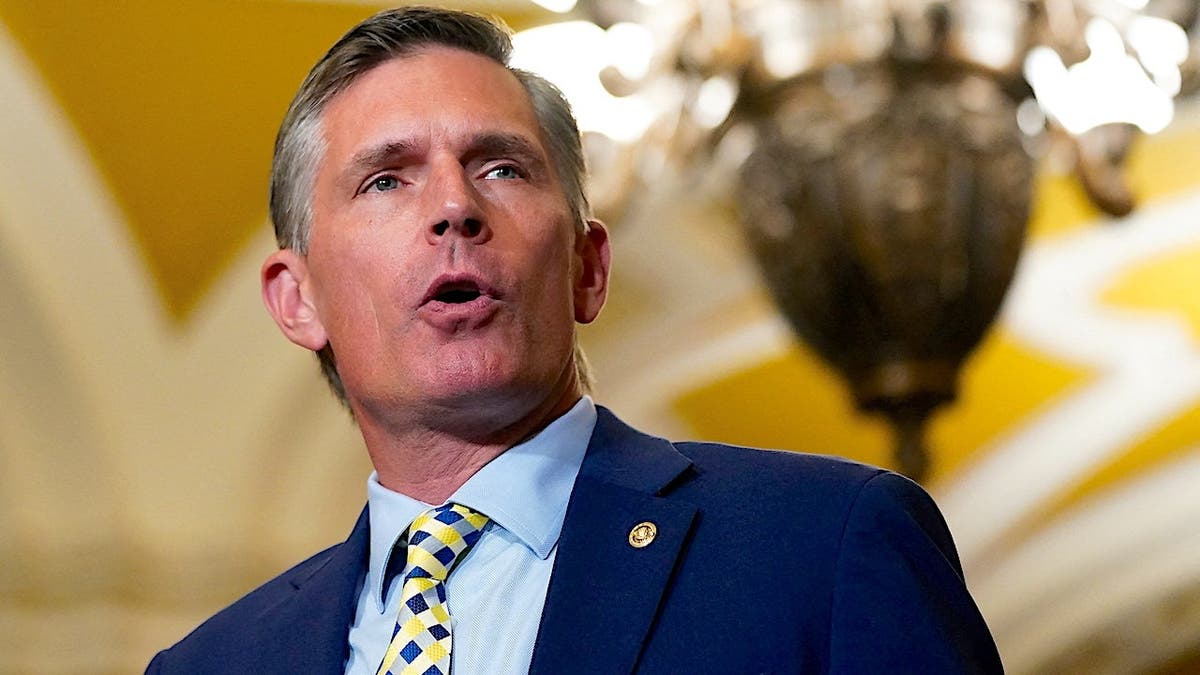
Sen. Martin Heinrich, D-N.M., was one of the key members of the left to help get Sen. Jim Justice’s Hershel Woody Williams bill passed unanimously in the Senate. (Elizabeth Frantz)
Republicans viewed that as an opening. Democrats stood in the way of passing a bill on affordability which 417 bipartisan House Members supported without blinking. Senate GOPers immediately seized this opportunity as a wedge against their adversaries. And, they interpreted this as a chance to assist their Ohio colleague.
“Tell the data centers we’re happy to have you. But you’ve got to pay your own electricity. People are not going to pay for it,” said Sen. John Kennedy, R-La.
Republicans were already leery about the uneven political footing when it comes to AI. Even more so with data centers. Voters are not enamored with the results of the Big, Beautiful Bill, passed last summer. But dealing with data centers is more immediate and might resonate with those who soured on the Republican brand.
“In Missouri, people are absolutely scared to death that these data centers are going to take all the prime farm ground of the state. And then they’re going to raise electricity bills so high, no one will be able to afford them,” said Sen. Josh Hawley, R-Mo.
The official schedule intended for the Senate to meet this week. But once September hit and no government shutdown loomed, senators from both sides – especially those facing challenging elections – wanted to skip Washington and campaign back home. Yours truly asked Senate Minority Leader Chuck Schumer, D-N.Y., why his party stood in the way of the Senate aligning with the House on that data center/utilities measure.
“Was this blocked in the Senate last week by Democrats as an effort to prevent Sen. Husted from having a win in this competitive race?” I asked.
“Sen. Husted’s bill is a fraud. It’s voluntary. No company has to do it. The bill we have is mandatory. It is much stronger and is what is needed,” replied Schumer.
There is something to Schumer’s argument about how muscular the bill is. The legislation says public utility regulators must only consider a standard for ratepayers. Nothing is required. Thus, there’s wiggle room for tech firms.
HAWLEY TAKES AIM AT ‘CORPORATE WELFARE’ AFTER GOP-BACKED TAX BREAK BOOSTED CONTROVERSIAL INDUSTRY
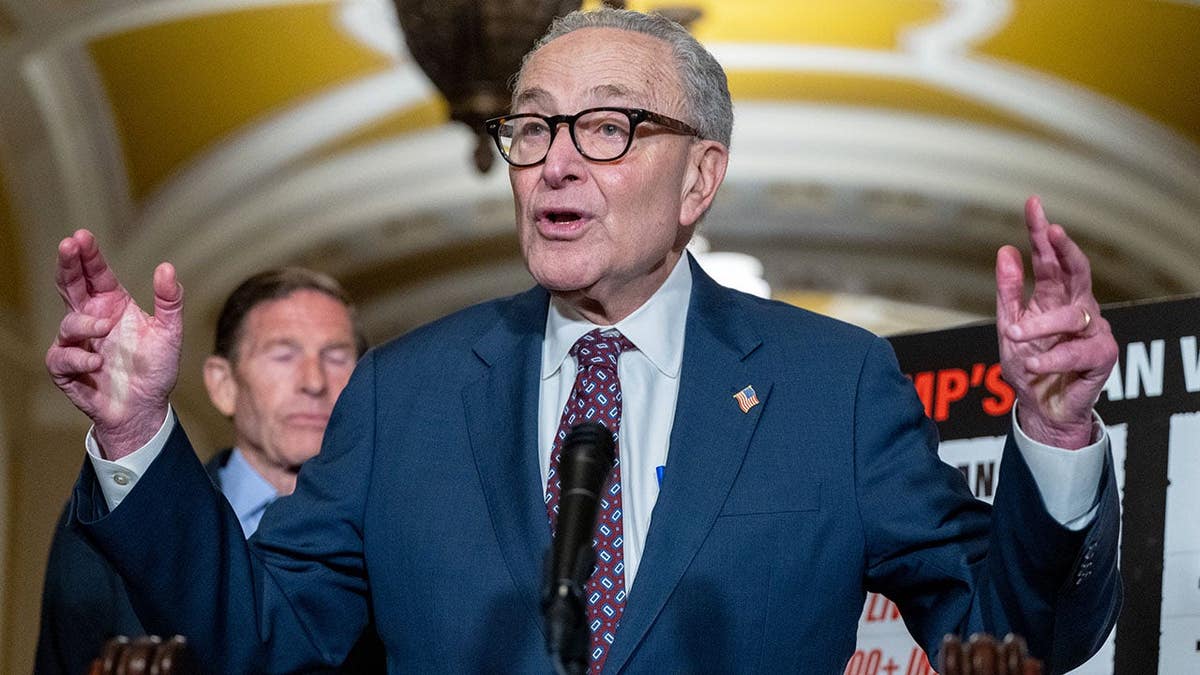
Senate Minority Leader Chuck Schumer, a Democrat from New York, speaks during a news conference following Senate Democratic policy luncheons at the U.S. Capitol in Washington, D.C., on Tuesday, June 23, 2026. (Daniel Heuer/Bloomberg via Getty Images)
“What we’re saying is that we can do much better,” said Sen. Chris Van Hollen, D-Md. “Is it a little step forward? Yes. But it’s not meeting the moment. So our view is we should expand it to make sure that ratepayers aren’t having to subsidize the richest corporations on the planet.”
But a lot of Republicans aren’t buying what Schumer and Van Hollen are saying. The Democratic objections are all about three things: Politics. An endangered GOP senator in the most expensive Senate contest in the country. And, Democrats hoping to flip the seat in their favor.
“Sen. Schumer, what he cares about is the midterm election and politics. And I don’t think he cares about the substance of this,” said Sen. John Cornyn, R-Texas. “Obviously there’s a hot and heavy Senate race going on in Ohio and he doesn’t want to let Sen. Husted have something he can talk about when he goes home.”
Republicans view the opportunity to turn the affordability issue against Democrats – capitalizing on Schumer’s remark and forcing Democrats to take a stand. Either you’re for affordability (especially as it pertains to the toxic issue of data centers) or you’re not. Moreover, this could boost Husted in his competitive contest with former Sen. Sherrod Brown, D-Ohio. In fact, it was the Senate GOP’s campaign arm which specifically flagged vulnerabilities for Republicans generally and Husted in particular over the summer.
Thune tees up a test vote on Wednesday to dare Democrats to either start debate on the bill or block it again. That vote requires 60 yeas. So Democratic cooperation is required. Although there’s skepticism anything happens, some Democrats may vote for it. That means the Senate is on the bill. And it’s open to debate and amendments. Thune would have to forge a bipartisan time agreement to finish the measure quickly.
Otherwise – by the book – this would drag into the weekend. And no one wants that. Especially Republicans with competitive races.
12 RACES SCRAMBLE SENATE BATTLEFIELD AS DEMOCRATS EYE COMEBACK
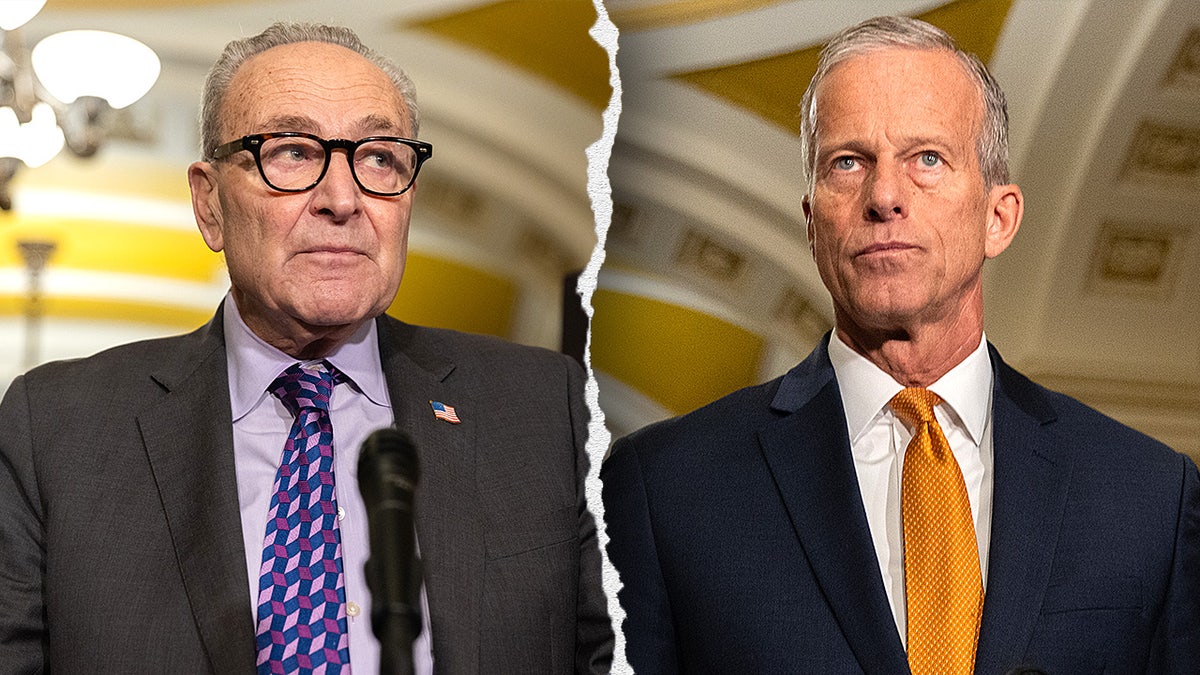
Senate Majority Leader John Thune, R-S.D., and the GOP are gearing up for a floor battle with Senate Minority Leader Chuck Schumer, D-N.Y., and Senate Democrats over Trump-backed voter ID legislation. (Nathan Posner/Anadolu via Getty Images)
Thune and Schumer want senators back home campaigning. If Democrats impede the legislation Wednesday, the Senate might hang around Thursday or that’s it until after the midterms. Regardless, Republicans will have engineered a vote which they can boomerang against Democrats. Or, at least help Husted and send him back to the Buckeye State with a win.
While it’s not the best optic for Democrats to oppose this bill, their resistance might not directly wound anyone this fall. The reason: Democrats have a lot of chances to pick up seats. But vulnerable Democrats aren’t on the ballot. None of the Democratic Senate nominees in competitive seats like Maine, Florida, North Carolina, Ohio, Michigan, Iowa, Texas, Nebraska, Kansas and Alaska currently hold office. The only sitting Democrat in cycle who has a mild race is Sen. Mark Warner, D-Va.
So for the Democrats, this is about playing defense. For Republicans, this is about playing offense. And the GOP is on offense primarily for Husted.
CLICK HERE TO DOWNLOAD THE FOX NEWS APP
But the willingness of Senate GOPers to spend an extra week in Washington speaks volumes. It underscores how worried they are about the affordability issue. And in particular, their concern about elevating the work of Husted.