NEWYou can now listen to Fox News articles!
TONOPAH, Nev. — An Obama-era solar power plant once hailed as a “clean energy marvel” and backed by more than $1 billion in federal support has gone bankrupt for a second time and sold for just $7 million — with the estimated taxpayer tab potentially reaching $507.6 million.
Rising from the barren Nevada desert, the Crescent Dunes Solar Energy Project looks like a futuristic fortress in a vast, dusty wasteland, with more than 10,000 mirrors surrounding a giant central tower. The plant was designed to generate solar electricity even after sunset, using an emerging technology that promised to revolutionize green energy in America.
The Obama administration bet big on the project, backing it with a $737 million federal loan guarantee and around $275 million in Treasury grant awards as part of its broader $90 billion push to combat climate change and stimulate the economy following the 2008 financial crisis.
The Crescent Dunes solar plant’s central tower is shown unlit, left, and illuminated by reflected sunlight, right. The Obama-era project, backed by more than $1 billion in federal support, went bankrupt twice before selling for $7 million in July 2026. (Michael Dorgan/Fox News Digital (left); Getty Images (right).)
But the promise never matched the performance.
After operations began in late 2015, leaks and equipment failures repeatedly knocked the plant offline, production fell short and cheaper solar alternatives undercut its economics — driving the project into financial ruin and leaving taxpayers shouldering the cost.
The financial collapse comes 15 years after Solyndra, another Obama-backed solar company, went bankrupt and left taxpayers in the red for $528 million — a sum Crescent Dunes’ estimated taxpayer tab could nearly match.
“The Crescent Dunes solar project is a microcosm of what is wrong with Democrat governance: the Green New Scam, hundreds of millions in taxpayer dollars wasted, fraud, and a cover-up,” Rep. Lance Gooden, R-Texas, told Fox News Digital.
OBAMA-BACKED $2.2B GREEN ENERGY ‘BOONDOGGLE’ LEAVES TAXPAYERS ON THE HOOK
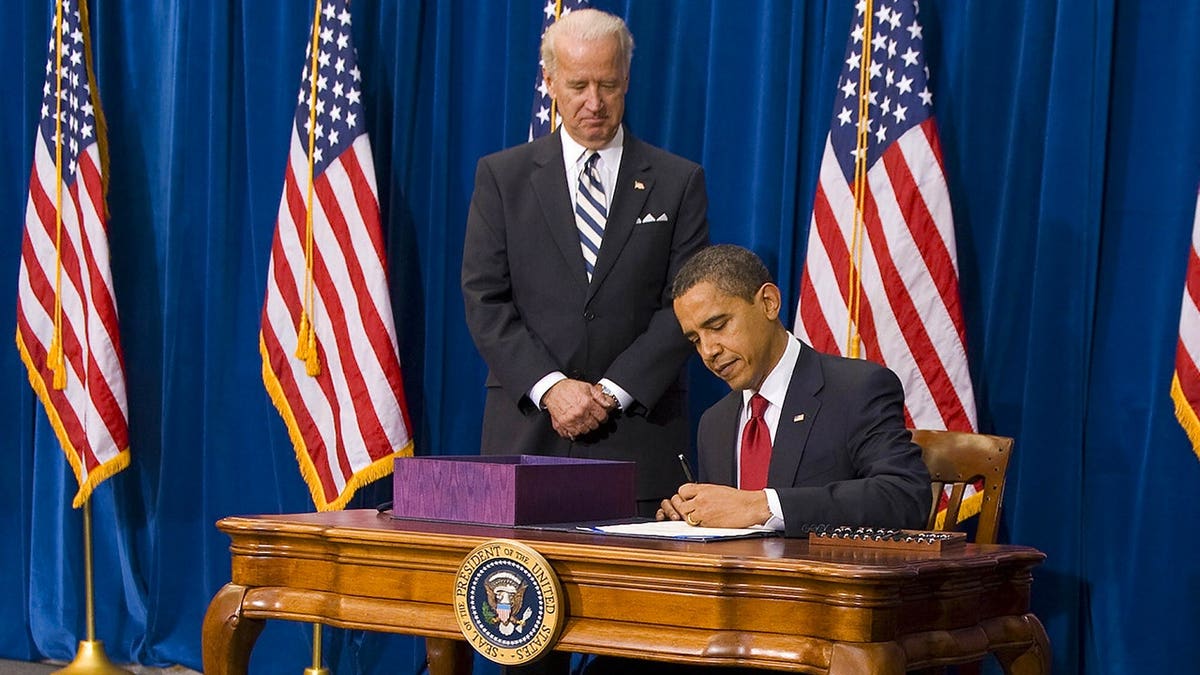
President Barack Obama signs the $787 billion American Recovery and Reinvestment Act as Vice President Joe Biden looks on in Denver, Colorado, on Feb. 17, 2009. The legislation helped finance the Obama administration’s push into renewable energy, including the federal loan program that backed the Crescent Dunes solar project in Nevada. (Jim Watson/AFP via Getty Images)
The billion-dollar bet
Crescent Dunes sits about 13 miles northwest of the old mining town of Tonopah, roughly halfway between Las Vegas and Reno.
The isolated facility, which Fox News Digital toured, is surrounded by miles of barren desert, scrubland and distant mountain ranges.
Across the 2,250-acre federal site, more than 10,000 giant mirrors surround a 640-foot tower — the centerpiece of a system designed to overcome one of solar power’s biggest limitations: darkness.
Unlike ordinary solar panels, which convert sunlight directly into electricity, Crescent Dunes focuses the sun’s rays onto a receiver atop the tower, heating molten salt to roughly 1,050 degrees Fahrenheit. The salt stores that heat in a massive insulated tank, allowing it to produce steam that drives an electricity-generating turbine long after sunset.
That combination made it the first commercial-scale U.S. solar tower to use molten salt to both collect and store the sun’s heat. DOE projected it would generate 482,000 megawatt-hours annually, with a maximum output of 110 megawatts — enough to supply more than 75,000 Nevada homes during peak periods.
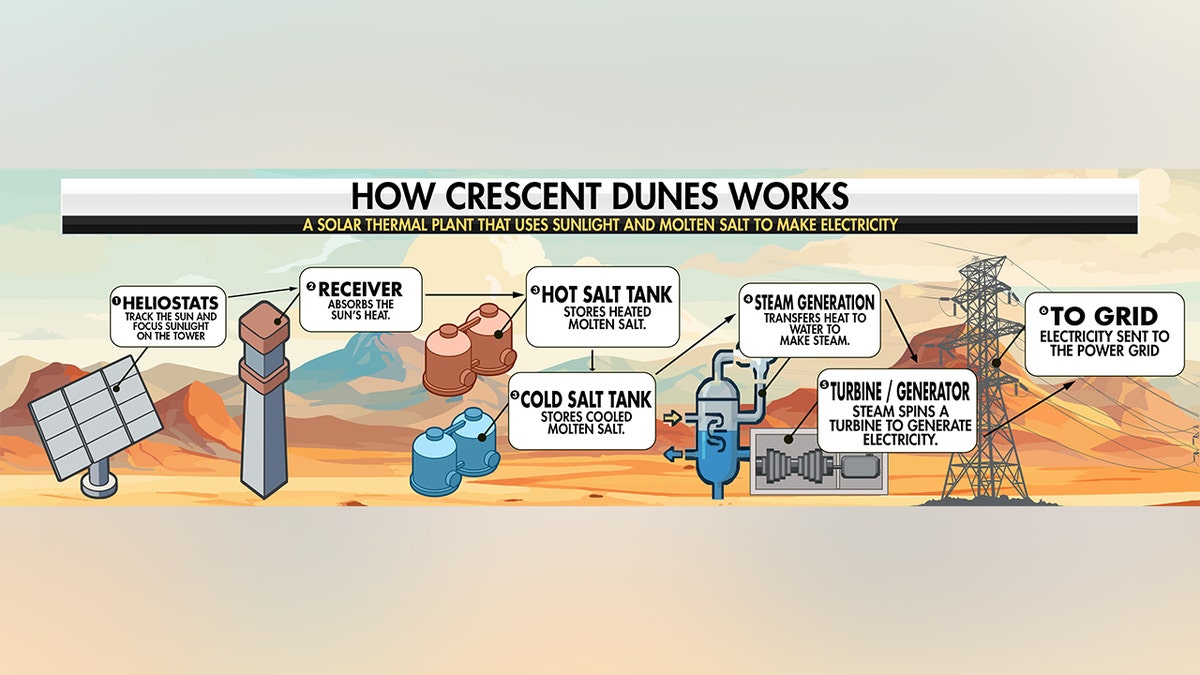
The Crescent Dunes solar plant uses more than 10,000 mirrors to concentrate sunlight onto a central receiver, heating molten salt that stores energy. The stored heat is used to produce steam, drive a turbine and generate electricity, including after sunset. (Fox News)
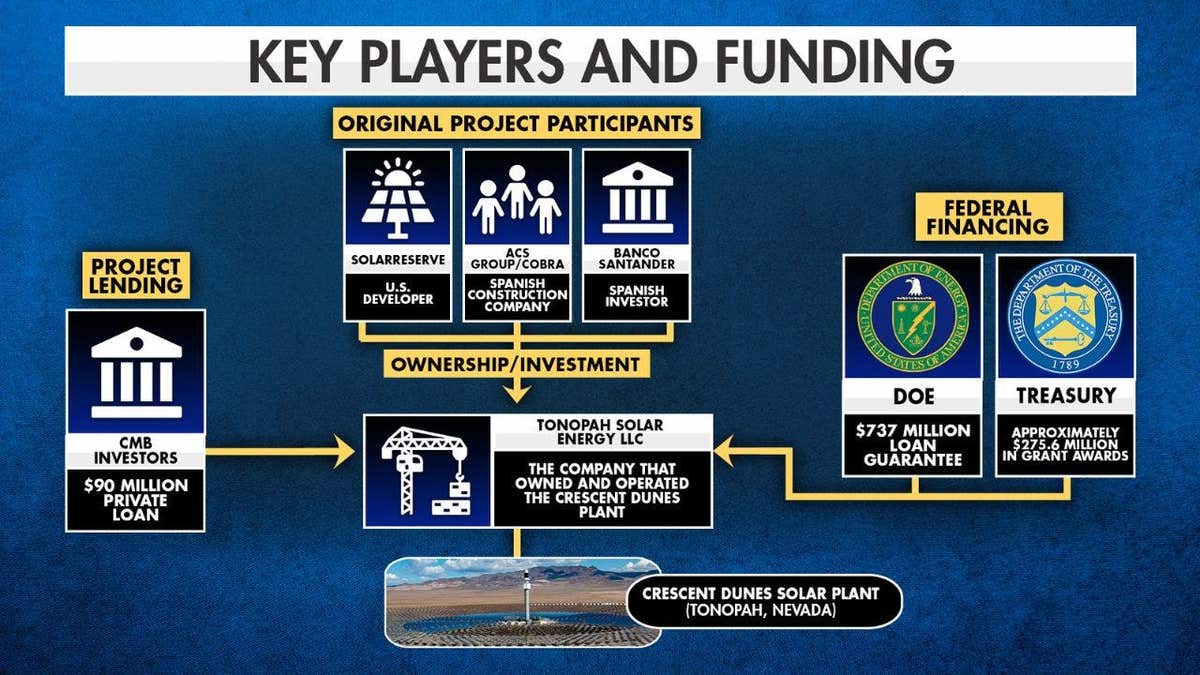
SolarReserve, ACS Group/Cobra and Banco Santander were original project participants in Crescent Dunes, which received a $737 million Department of Energy loan guarantee and approximately $275.6 million in Treasury grant awards. CMB investors also provided $90 million in private financing. (Fox News)
American developer SolarReserve developed the project, while Spanish contractor Cobra, a subsidiary of construction giant ACS Group, built it.
Both held ownership stakes in the company that owned the plant, Tonopah Solar Energy.
Spanish banking giant Banco Santander also held an ownership stake in Tonopah Solar Energy.
Then-Senate Minority Leader Harry Reid, D-Nev., championed the project. In 2016, he called it an “engineering and clean energy marvel” and predicted that “Nevada will benefit for decades.”
The project reflected the Obama administration’s push to expand clean energy by using taxpayer-backed financing to help bring promising but commercially risky technologies to market.
But Crescent Dunes showed how expensive those gambles could become when they failed.
The promise unravels
Crescent Dunes’ problems emerged almost immediately.
A major leak in its molten-salt storage tank occurred in October 2016 — less than a year after commercial operations began.
During that shutdown, Treasury approved a cash-grant payment in March 2017 under the Obama-era stimulus program — funding that later became the subject of serious fraud allegations.
It went back online in July 2017, but restarting the plant did not resolve its performance problems.
Even in 2018, its best full year through 2025, Crescent Dunes generated just 41% of the annual electricity output projected by DOE, according to federal energy records.
Then another tank failure halted generation in March 2019.
Seven months later, the repeated breakdowns and poor performance eventually cost Crescent Dunes its sole electricity customer when NV Energy terminated its 25-year agreement.
Without its long-term power contract, Crescent Dunes spiraled into financial trouble, culminating in its first bankruptcy in July 2020.
The 2020 restructuring handed ownership to ACS through its affiliate, Crescent Dunes Investment, with Cobra running the plant. The turnaround plan counted on extensive repairs restoring production to 400,000 megawatt-hours a year — more than twice its best annual output.
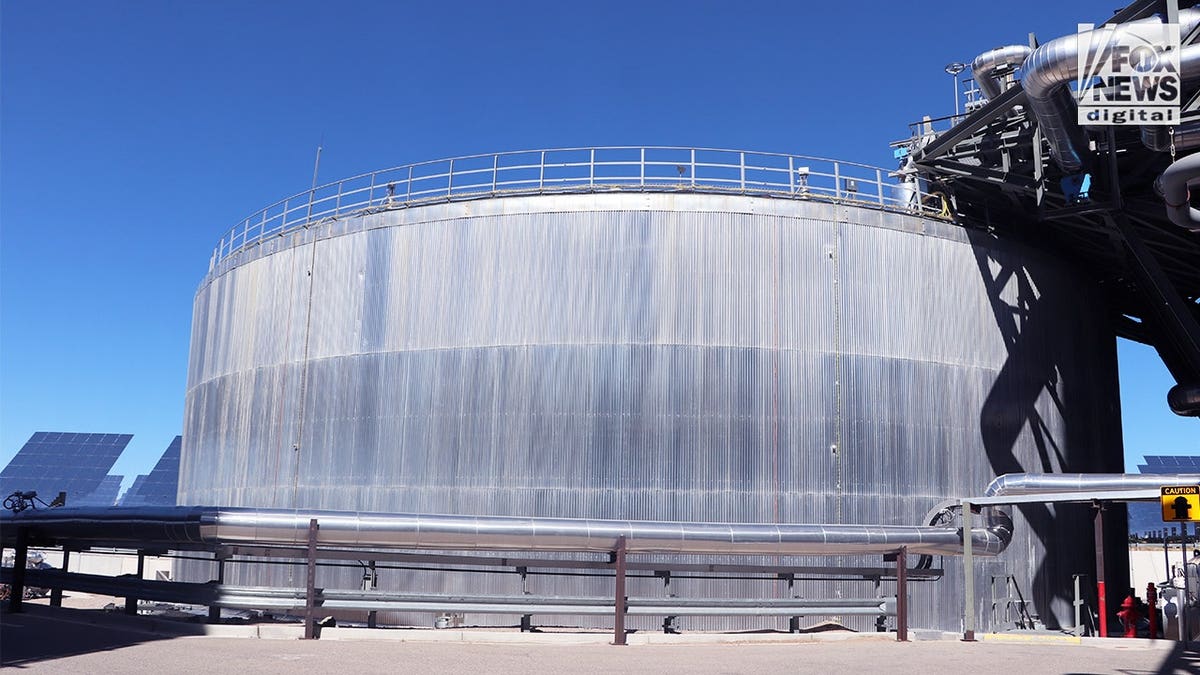
The hot molten-salt storage tank at Crescent Dunes in Nevada. Repeated leaks involving the plant’s molten-salt storage system contributed to lengthy shutdowns and financial troubles. (Michael Dorgan/Fox News Digital)
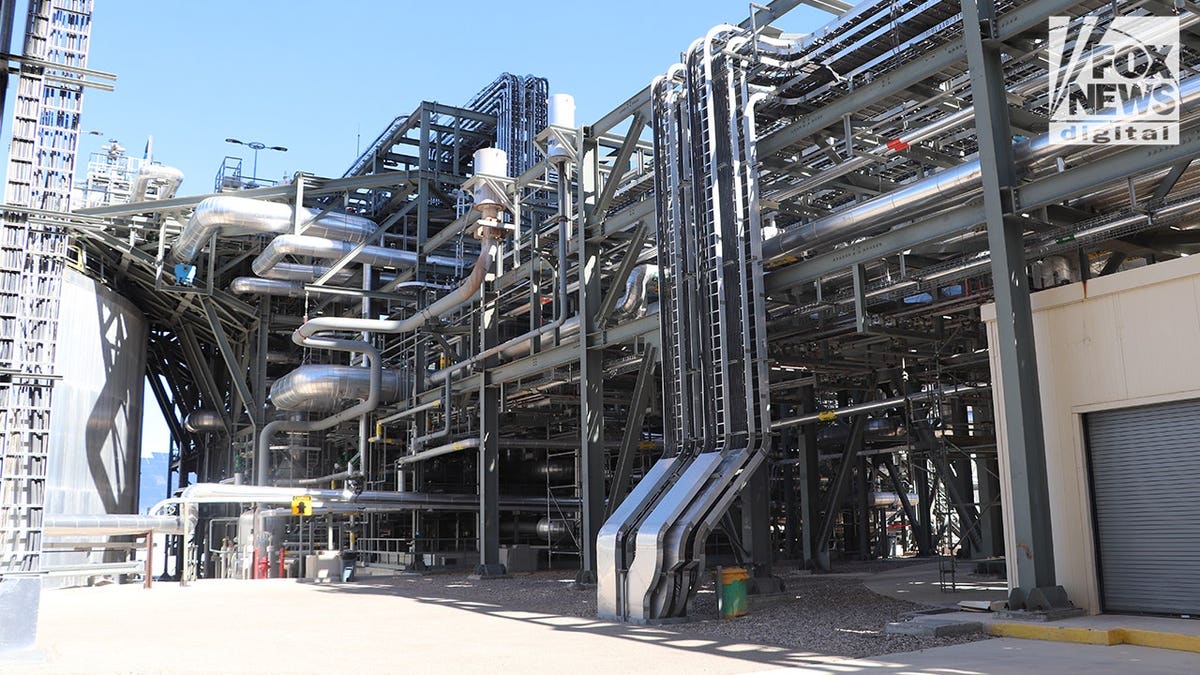
A network of pipes and industrial equipment forms part of the Crescent Dunes Solar Energy Project near Tonopah, Nevada. The concentrated solar plant uses molten salt to capture and store heat before using it to generate steam and electricity. (Michael Dorgan/Fox News Digital)
But the revival faltered.
The plant restarted in July 2021, only for further molten-salt-tank leaks in 2022 and 2023 to force additional shutdowns.
Although the plant resumed selling electricity under shorter-term agreements, it continued to lose money and relied on financial support from affiliated companies, court records show.
REGULATORS ALLOW OBAMA-ERA SOLAR PLANT TO KILL THOUSANDS OF BIRDS ANNUALLY, INVESTIGATION FINDS
By January 2026, it was back in bankruptcy court. This time, the billion-dollar plant went on the auction block.
Mississippi-based Sons of Liberty Construction, a company owned by three brothers, bought it for $7 million in July and are attempting to revive it.
The plant was generating electricity during Fox News Digital’s visit, although they said it remained well below its initial intended output. Their efforts to restore the troubled facility are examined in Part 3 of this series.
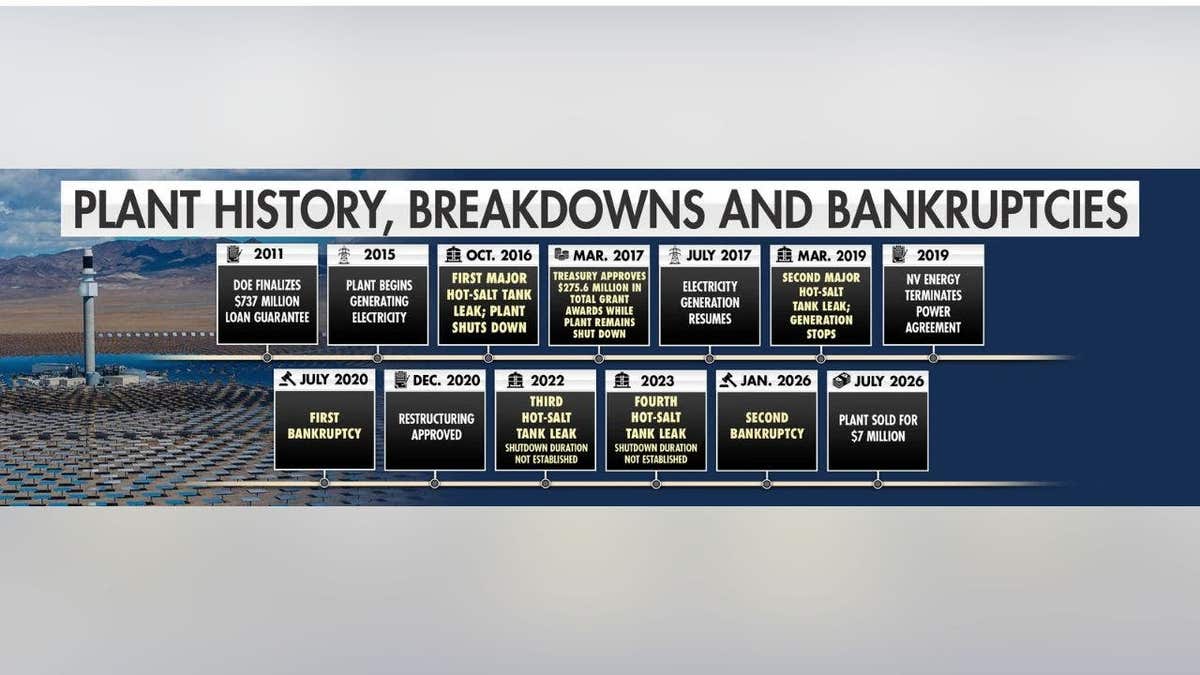
A timeline of the Crescent Dunes solar plant shows major equipment failures in 2016, 2019, 2022 and 2023, along with federal financing, Treasury grant approval, two bankruptcies and the project’s eventual $7 million sale in July 2026. (Fox News)
What went wrong?
Behind that history of breakdowns and bankruptcies lies a dispute over what failed: the solar technology, the construction behind it, or a combination of both.
Bill Gould, SolarReserve’s co-founder and former chief technology officer, blamed the project’s Spanish construction contractor, ACS Cobra.
“It was a tragedy of mismanagement,” Gould told Bloomberg in 2020, accusing the contractor of delaying necessary work and designing a defective molten-salt tank.
An unnamed engineer who said he had worked at Crescent Dunes since its early development offered a similar account, blaming the tank failures on design and welding problems. He told SolarPACES in 2023 that the plant’s solar collection technology had experienced comparatively few problems.
“It’s just the old tech that’s having these troubles,” the engineer said, referring to the conventional thermal-power equipment.
The sheer size of the storage system posed a significant challenge, according to Oliver Hemmers, a physicist and energy researcher who formerly led the Harry Reid Center for Environmental Studies at the University of Nevada, Las Vegas.
“Ultimately, the larger you make those tanks that hold the molten salt, the harder the material science challenges become,” Hemmers told Fox News Digital.
Hemmers said temperature swings of hundreds of degrees can cause the metal to repeatedly expand and contract, eventually creating cracks and leaks. He had not reviewed the plant’s engineering plans but questioned whether the developers had sufficiently tested the tank design.
“You need to have alloys that can withstand that heat variation without moving much. Otherwise, when the walls move, the vessel breaks, cracks and leaks. So I’m not sure how much research they really put into the vessel design,” he said.
Hemmers noted that Crescent Dunes relied on a massive molten-salt storage tank, while other solar thermal facilities have used multiple smaller tanks to reduce the stresses caused by repeated heating and cooling.
Court records show how efforts to prevent further failures came at a cost.
When the plant resumed operations in July 2023, operators lowered the hot-salt tank’s temperature from its original design level of about 1,050 degrees Fahrenheit to about 850 degrees. They later raised it to as high as 900 degrees, but the lower temperatures still reduced electricity production and revenue.
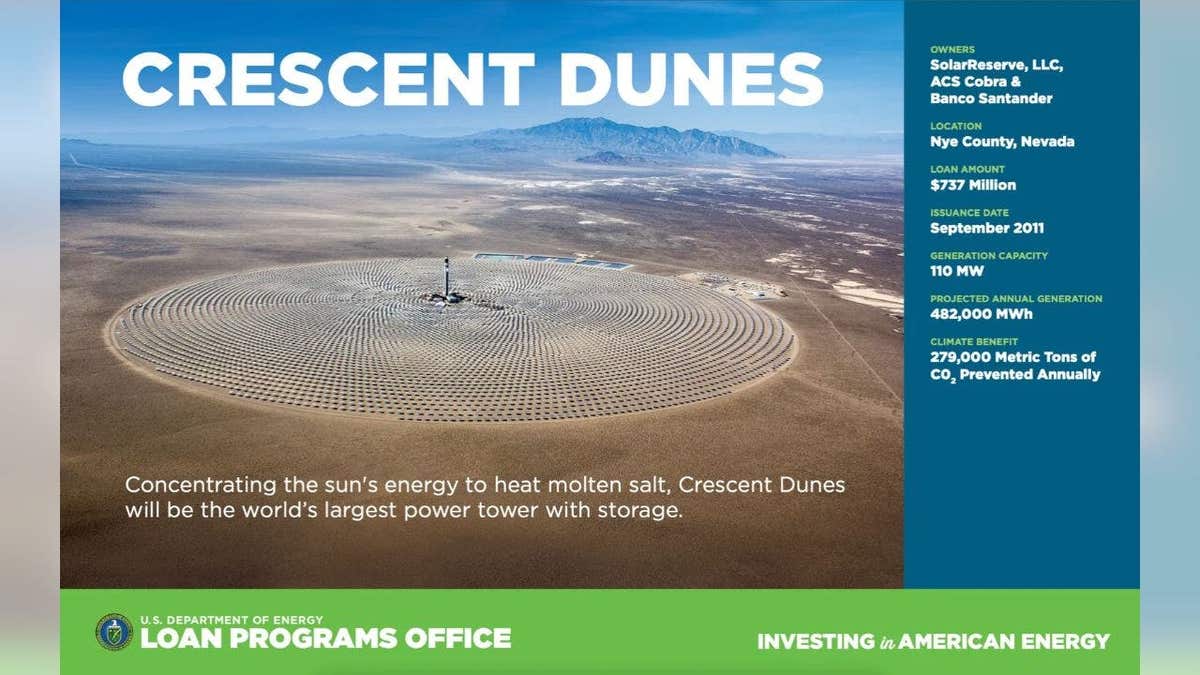
A 2015 Department of Energy promotional poster touts the Crescent Dunes solar project in Nevada, highlighting its $737 million federal loan guarantee and projected annual electricity generation of 482,000 megawatt-hours. The plant later suffered repeated equipment failures and two bankruptcies before being sold for $7 million in 2026. (U.S. Department of Energy)
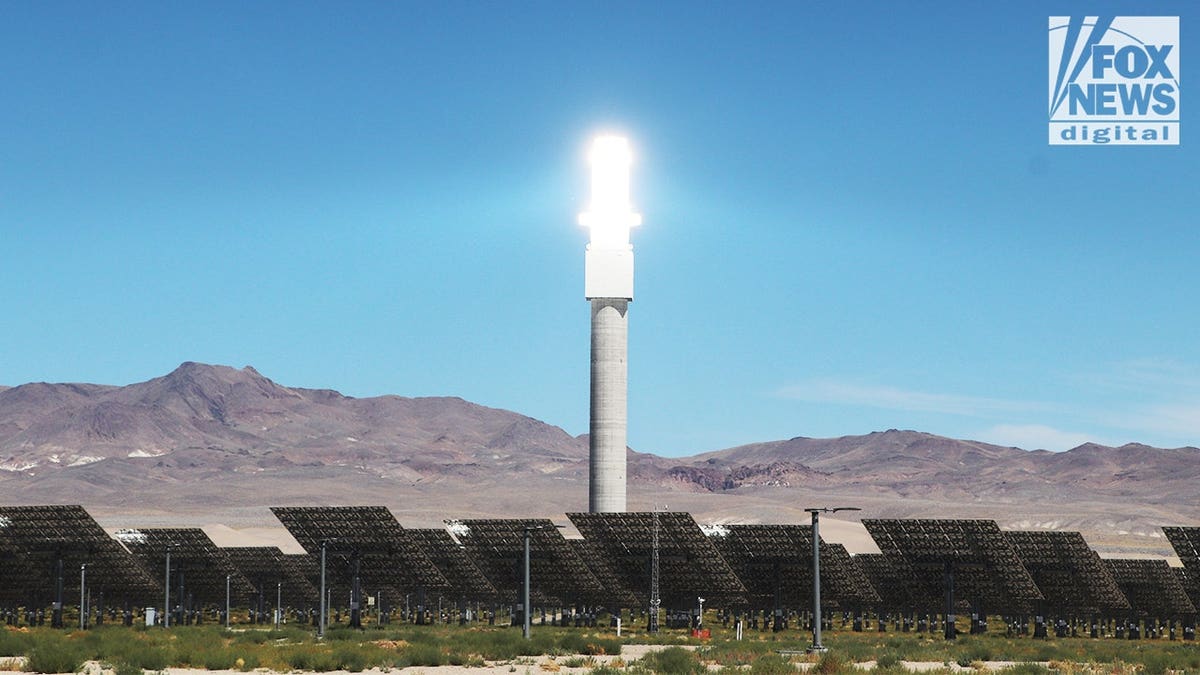
The receiver atop the 640-foot solar tower at Crescent Dunes glows as mirrors concentrate sunlight onto it near Tonopah, Nevada, in August 2026. The troubled plant was sold for $7 million following its second bankruptcy earlier that year. (Michael Dorgan/Fox News Digital)
As Crescent Dunes struggled to meet its production targets, competing solar technology was getting cheaper.
Falling prices for conventional solar panels, known as photovoltaic panels, including those manufactured in China, undercut the project.
Photovoltaic panels convert sunlight directly into electricity, offering a simpler and increasingly cheaper way to generate solar power.
Crescent Dunes, by contrast, uses more than 10,000 computer-controlled mirrors, called heliostats, to focus sunlight onto a receiver atop its central tower. The heat warms molten salt, which is then used to produce steam that drives turbines to generate electricity.
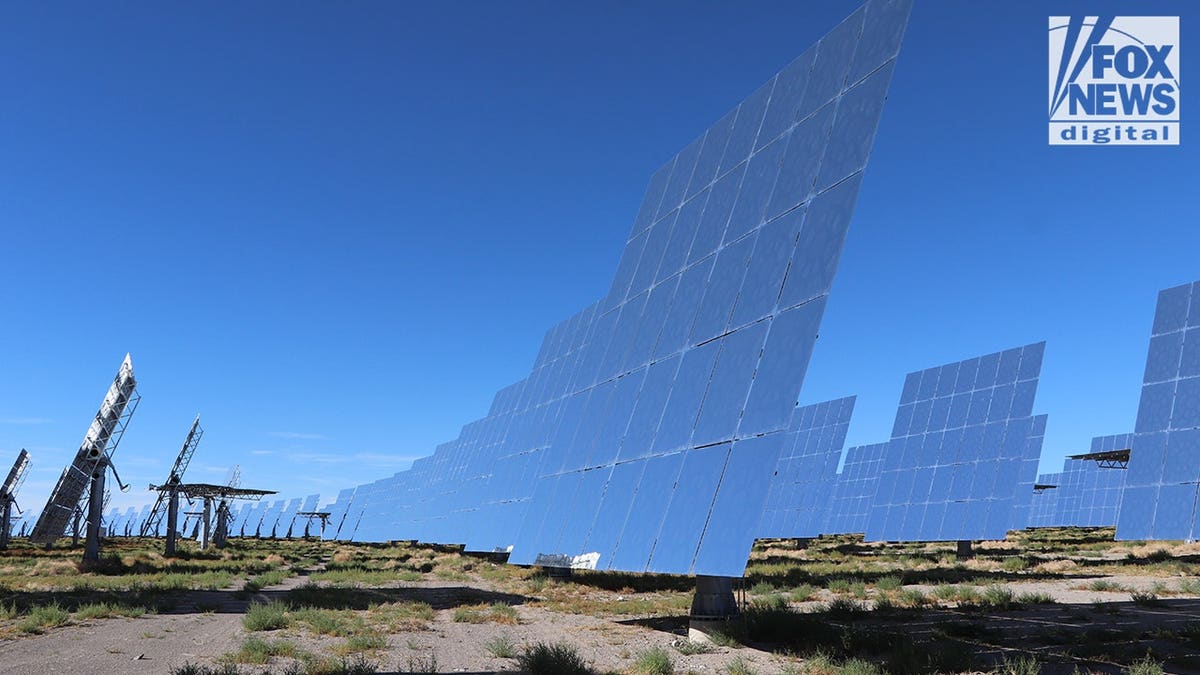
The mirrored faces of heliostats at the Crescent Dunes Solar Energy Project near Tonopah, Nevada. The mirrors concentrate sunlight onto a receiver atop the plant’s central tower, heating molten salt used to store thermal energy. (Michael Dorgan)
Crescent Dunes, however, has one key advantage: Its molten-salt storage system allows it to generate electricity even after sunset, something conventional solar panels cannot do without additional storage.
Those same economic pressures have battered California’s Ivanpah solar plant, another Obama-era project Fox News Digital reported on that uses thousands of heliostats to concentrate sunlight. Unlike Crescent Dunes, Ivanpah cannot store the sun’s heat to generate electricity after dark.
Fox News Digital contacted ACS Group and its attorneys but received no response.
Who pays for failure?
The project was backed by more than $1 billion in federal loan guarantees and grants.
That included a $737 million Department of Energy loan guarantee. DOE said it resolved its financial interests in the project through the plant’s first bankruptcy settlement in 2020 in an effort to maximize taxpayer recovery and estimated its loss on the loan at $232 million — a figure the department confirmed to Fox News Digital on background.
The Trump administration’s Department of Energy blasted the handling of taxpayer money behind the project.
“It is unfortunate that previous administrations irresponsibly managed taxpayer dollars in their support of the Green New Scam. Since 2020, DOE has had no ownership, operational, or financial interest in the Obama-era project,” DOE assistant press secretary Caroline Murzin told Fox News Digital in a written statement.
The project also received a $275.6 million Treasury grant award, which, unlike the loan, was not intended to be repaid provided the project met the program’s requirements.
Combined, the Treasury grant awards and DOE’s estimated loan loss would put the total federal cost at approximately $507.6 million, although Treasury has not confirmed the full grant was disbursed and DOE has not provided a final accounting of its loan losses.
Fox News Digital has filed Freedom of Information Act requests with both the Energy and Treasury departments seeking a full accounting of the federal loans, grant payments and taxpayer losses associated with Crescent Dunes.
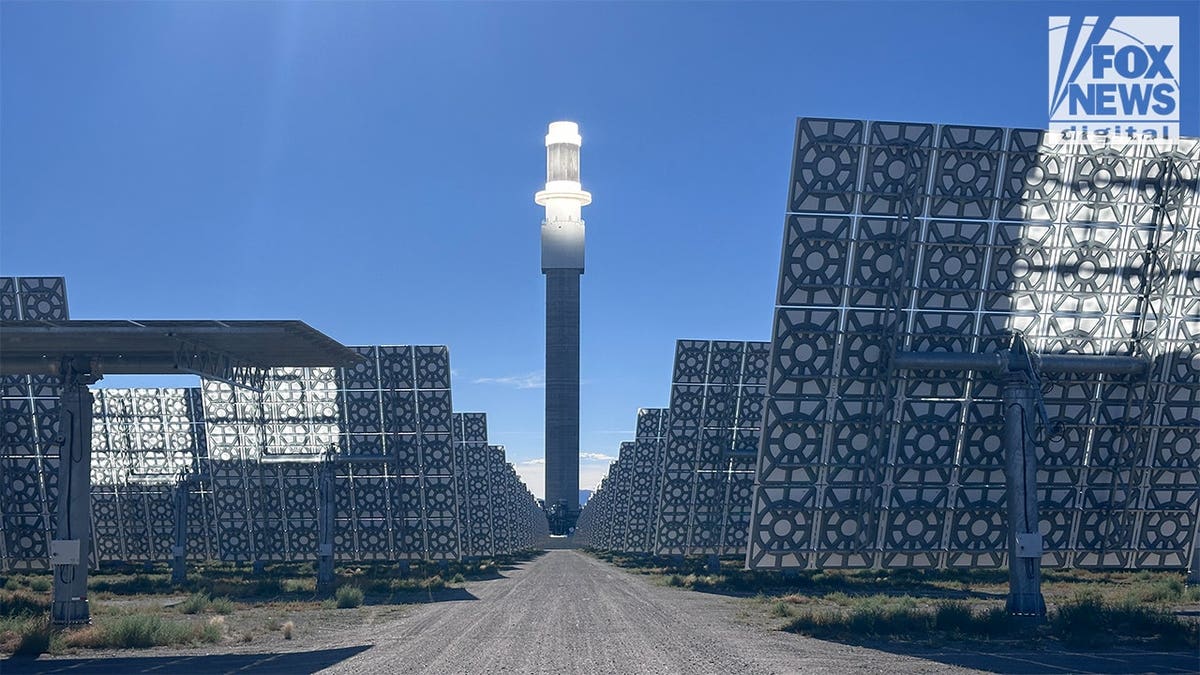
Rows of computer-controlled heliostats surround the receiver tower at the Crescent Dunes Solar Energy Project near Tonopah, Nevada. The mirrors track the sun and direct concentrated sunlight toward the receiver atop the tower. (Michael Dorgan/Fox News Digital)
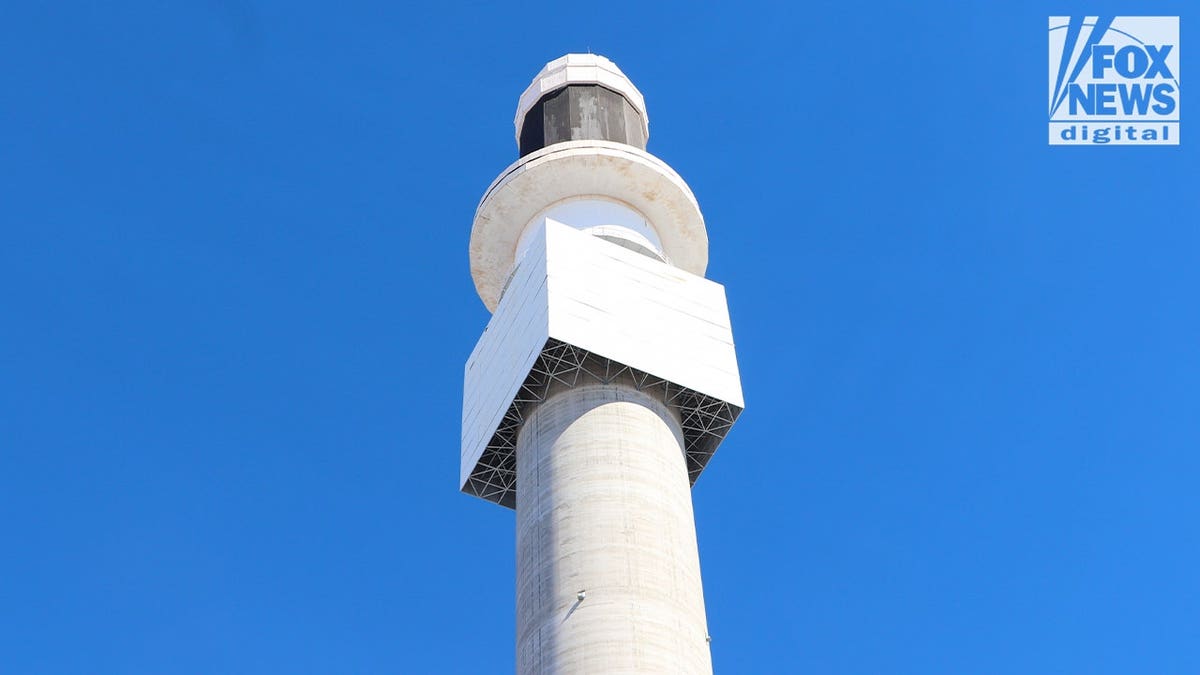
A view looking up at the receiver tower at the Crescent Dunes Solar Energy Project near Tonopah, Nevada, while the receiver is not being illuminated by concentrated sunlight. (Michael Dorgan/Fox News Digital)
The Treasury grant also became the focus of a private investor-backed lawsuit alleging that companies involved in construction fraudulently secured the money. A judge dismissed the case at DOJ’s request and the investors are appealing.
The allegations and the fight over the dismissal are examined in Part 2.
The taxpayer gamble
Reid, who died in 2021, had championed Crescent Dunes as a showcase for government and private industry working together to build “the next generation of clean energy technology.”
Its financial collapse has sharpened the question behind that partnership: Should taxpayers bankroll commercially risky energy projects that private lenders are unwilling to fully finance?
“The government shouldn’t be picking winners and losers,” Véronique de Rugy, an economist at George Mason University’s Mercatus Center, told Fox News Digital.
“This is not the role of the government. The government is not good at actually picking projects that somehow the private sector is leaving on the sidewalk,” she said.
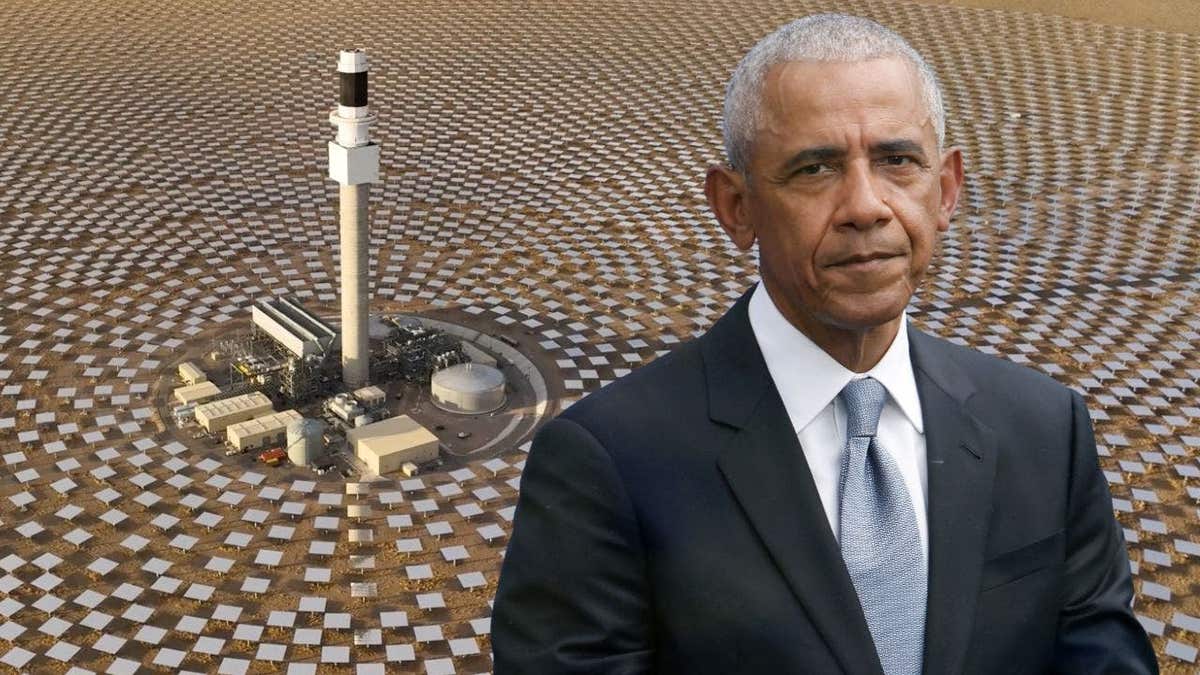
Former President Barack Obama, right, is pictured alongside the Crescent Dunes solar plant in Nevada, left. The Obama-era project received more than $1 billion in federal backing before going bankrupt twice and selling for $7 million in July 2026. The images are a composite. (Taylor Hill/Getty Images)
De Rugy argued that politicians take credit for publicly financed projects without facing the same consequences when they collapse. Unlike private investors, she said, politicians don’t personally bear the financial losses when their bets go wrong.
“So then they can go and do a ribbon cutting ceremony when the plant opens, and then they’re usually nowhere to be seen when the company goes under,” she said.
She also argued that many companies receiving government assistance would have succeeded without it, questioning why taxpayers should shoulder the risks of commercial investments.
“These subsidies go to projects that end up failing, right, then taxpayers have to shoulder the bill,” she said.
WATCH: Economist blasts Obama-era solar failure, says government shouldn’t subsidize private companies
Nick Loris, president of the Conservative Coalition for Climate Solutions (C3 Solutions), a conservative energy and environmental policy think tank, offered a different perspective, arguing that government financing can sometimes justify the risks of developing new technologies.
“I wouldn’t call it a mistake. I think it took a risky bet on a potentially promising technology that aimed to solve one of the challenges with solar in its intermittency,” Loris told Fox News Digital.
He argued that federal financing can help promising technologies reach the market when private investors are reluctant to take the risk, and that failures such as Crescent Dunes should be weighed against successful projects and interest earnings across DOE’s broader loan portfolio.
One example is California’s Desert Sunlight, a 550-megawatt solar farm that uses panels instead of mirrors and molten salt. In a 2024 assessment, DOE said the project helped prove the viability of large-scale solar and was meeting its loan obligations.
Across the broader program, DOE reported in its fiscal 2027 budget justification that borrowers had paid nearly $5 billion in interest, compared with nearly $1 billion in default losses, through Sept. 30, 2025.
But Hemmers questioned whether Crescent Dunes ever made economic sense, arguing that the billion-dollar investment was a risky gamble from the outset.
“Right, we kind of say, okay, that was a boondoggle. It didn’t work. And so now we move on, right, do something else,” Hemmers said.
CLICK HERE TO DOWNLOAD THE FOX NEWS APP
Asked whether Crescent Dunes deserved that label, he doubled down.
“I think so, yeah. I think from the get-go, it started off too expensive, and I think it was unfortunate, let’s say for the developer, that they run into all these technical issues on top of it,” he said.
“And as we can see from that project, it completely failed in the end.”
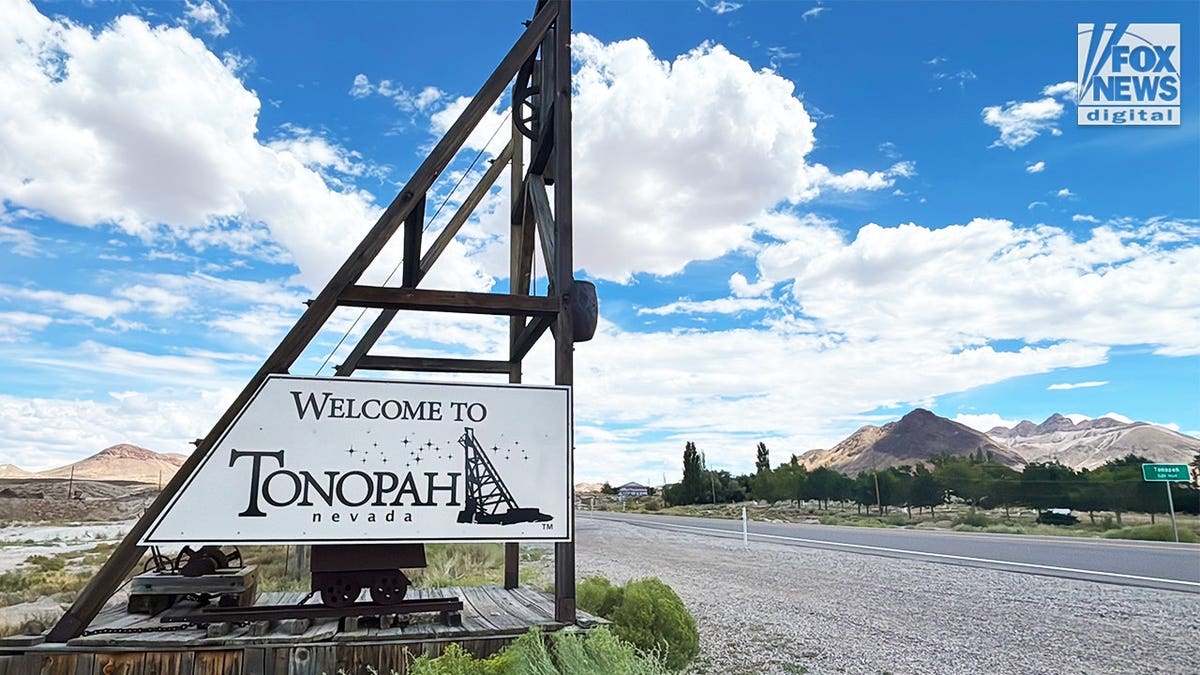
A welcome sign greets visitors to Tonopah, Nevada, a historic mining town roughly 13 miles southeast of the Crescent Dunes Solar Energy Project. (Michael Dorgan/Fox News Digital)
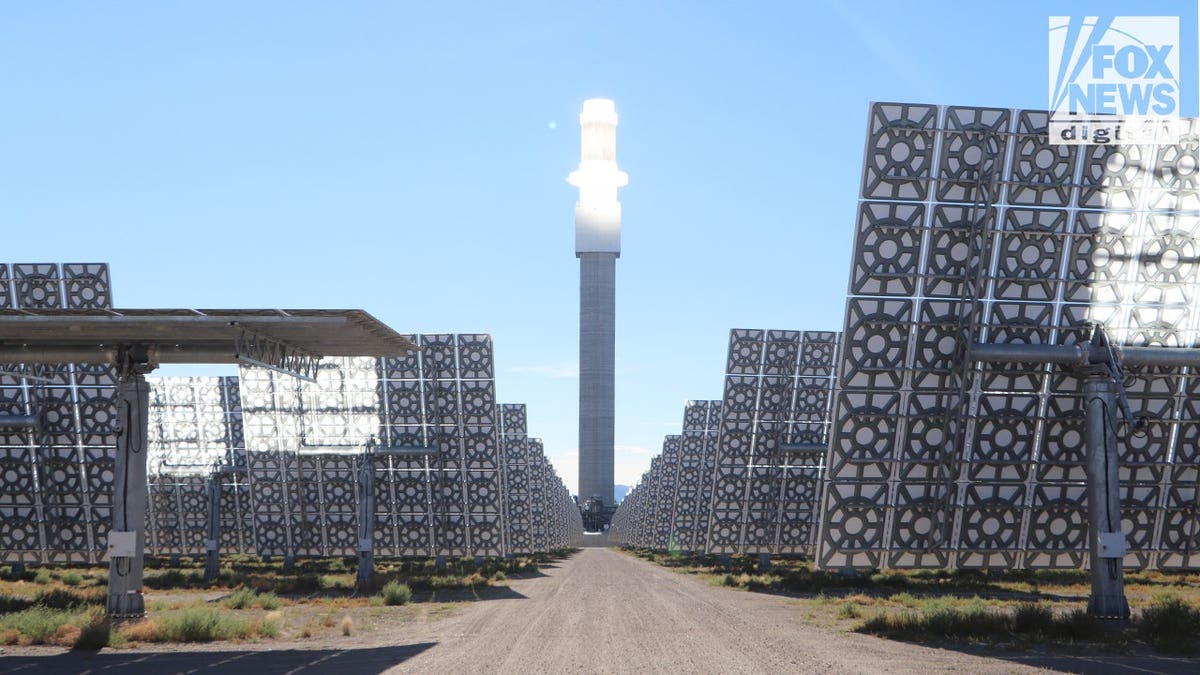
Rows of computer-controlled heliostats lead toward the glowing receiver tower at the Crescent Dunes Solar Energy Project near Tonopah, Nevada. The mirrors concentrate sunlight onto the receiver, where molten salt is heated and used to store thermal energy. (Michael Dorgan/Fox News Digital)